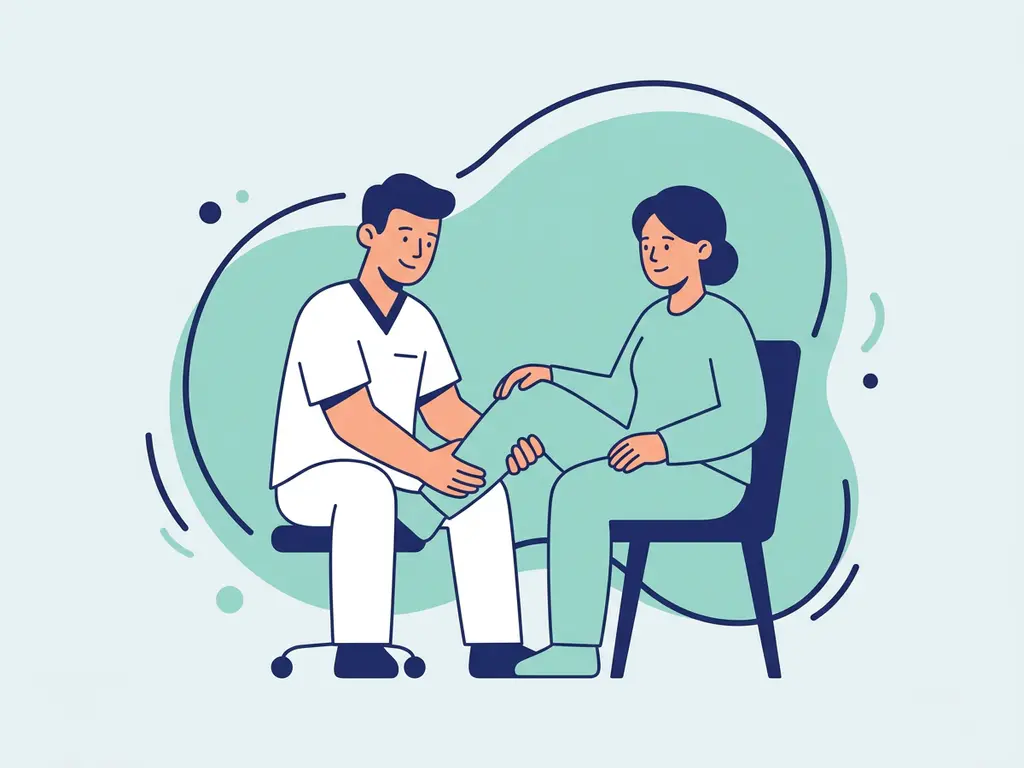
Fysiotherapie bij knieartrose richt zich op het versterken van de spieren rondom het kniegewricht, het verbeteren van de beweeglijkheid en het verminderen van pijn door gerichte oefentherapie. Voor mensen in de regio Breda bieden gespecialiseerde fysiotherapeuten een persoonlijke aanpak die aansluit op de ernst van de klachten en het dagelijks leven. De vragen hieronder geven een concreet antwoord op wat je kunt verwachten van oefeningen en begeleiding bij knieartrose.
Which exercises are most effective for knee osteoarthritis?
The most effective exercises for knee osteoarthritis are low-impact, strength-building movements that target the muscles around the knee without placing excessive stress on the joint itself. Quadriceps strengthening, hip abductor exercises, and controlled range-of-motion movements are consistently recommended because they improve joint stability and reduce the load the cartilage must absorb.
Practical examples include seated leg raises, wall squats held at a shallow angle, step-ups on a low step, and resistance band exercises for the inner and outer thigh. Swimming and cycling are also highly suitable because they build strength and endurance while keeping joint impact minimal. The key principle is progressive loading: starting with a manageable resistance and gradually increasing it as the muscles grow stronger and the knee becomes more capable.
A personalized exercise program is always more effective than a generic one because the right starting point depends on your current pain level, muscle strength, and how far the osteoarthritis has progressed.
How does physiotherapy reduce knee osteoarthritis pain?
Physiotherapy reduces knee osteoarthritis pain primarily by increasing the load capacity of the structures surrounding the joint. When the muscles around the knee are stronger and better coordinated, they absorb more of the forces generated during daily movement, which means the worn cartilage is placed under less stress. Less stress translates directly into less pain and improved function.
Beyond muscle strengthening, physiotherapy also addresses movement patterns that unknowingly increase joint strain. Many people with knee osteoarthritis compensate by shifting weight unevenly or avoiding certain movements entirely, which over time weakens specific muscle groups and worsens the cycle of pain. A physiotherapist identifies these patterns and corrects them through targeted exercises and movement coaching.
Education is an equally important part of pain reduction. Understanding what is happening inside the joint, what is safe to do, and what to expect during flare-ups gives patients confidence and reduces the fear-driven avoidance that often makes symptoms worse over time.
What exercises should you avoid with knee osteoarthritis?
With knee osteoarthritis, you should avoid high-impact exercises that repeatedly compress or twist the joint under heavy load. Running on hard surfaces, deep squats with added weight, jumping exercises, and sports involving sudden direction changes place significant stress on already-compromised cartilage and can accelerate discomfort and inflammation.
Prolonged kneeling and exercises that force the knee into its full range of motion against resistance are also best avoided, particularly during active flare-ups. This does not mean complete rest – inactivity is counterproductive for osteoarthritis. The goal is to replace high-impact activities with controlled, lower-impact alternatives that still challenge the muscles without aggravating the joint.
What counts as too much varies from person to person. A physiotherapist can help you identify your personal boundaries and build an exercise plan that keeps you active and progressing without triggering setbacks.
How often should you exercise with knee osteoarthritis?
People with knee osteoarthritis benefit from exercising most days of the week, with a general target of at least three to five sessions. Consistency matters more than intensity: shorter, regular sessions build strength and joint resilience more effectively than infrequent, intensive workouts that leave the knee needing several days to recover.
A realistic weekly structure might include two to three guided or home-based strengthening sessions, combined with daily low-impact activity such as walking or cycling. Rest days are still valuable, particularly after more demanding sessions, but complete inactivity for extended periods tends to increase stiffness and reduce the progress made through exercise.
As your strength and load capacity improve, your physiotherapist will typically adjust the frequency and intensity of your program. Progress is monitored closely so that the program evolves with you rather than staying static.
Can physiotherapy in Breda help before or after knee surgery?
Yes, physiotherapy is highly beneficial both before and after knee surgery. Pre-operative physiotherapy, sometimes called prehabilitation, strengthens the muscles around the knee before the operation so that the body enters surgery in the best possible condition. Patients who are stronger and better informed before their procedure tend to recover faster and experience fewer complications afterward.
Post-operative physiotherapy guides the recovery process step by step, helping patients regain mobility, rebuild strength, and return to daily activities safely. The early weeks after a knee replacement can be uncertain and physically demanding, and professional guidance during this phase makes a significant difference in both outcomes and confidence.
For people in the Breda region looking for this kind of specialized support, Vief Leven offers exactly this combination of care.
Hoe Vief Leven helpt bij knieartrose
Vief Leven is een gespecialiseerde fysiotherapiepraktijk die zich volledig richt op heup- en knieartrose. De praktijk werkt met de Vief Methode: een persoonlijke aanpak waarbij een behandelplan op maat wordt opgesteld, de juiste informatie over jouw specifieke situatie centraal staat en de belastbaarheid van het kniegewricht stap voor stap wordt opgebouwd door oefentherapie.
- Geavanceerde trainingsapparatuur met luchtdruktechnologie voor veilige en effectieve opbouw
- Data-gedreven voortgangsmonitoring zodat het programma voortdurend wordt bijgesteld
- Begeleiding voor, tijdens en na een knieoperatie
- Fysiotherapie aan huis in de vroege herstelfase na een ingreep
- De Vitaliteitsclub: een veilige omgeving om actief te blijven met artrose
Of je nu in Breda woont en zoekt naar gerichte hulp bij knieklachten, wilt starten met oefeningen, of je voorbereidt op een operatie: bij Vief Leven staat een persoonlijke aanpak centraal. Lees meer over de mogelijkheden op de pagina knieartrose of maak direct een afspraak voor een kennismaking zonder verplichtingen.
Veelgestelde vragen
How long does it take to notice improvement from physiotherapy for knee osteoarthritis?
Most people begin to notice meaningful improvements in pain and function within 6 to 12 weeks of consistent physiotherapy, though this varies depending on the severity of the osteoarthritis and how regularly the program is followed. Early gains are often related to improved muscle activation and movement confidence, while structural strength improvements take longer to develop. It is important not to judge progress too early — some weeks will feel harder than others, particularly if a flare-up occurs, but this does not mean the treatment is failing.
Can I do my knee osteoarthritis exercises at home, or do I need to go to a clinic?
A combination of both tends to produce the best results. Clinic-based sessions allow a physiotherapist to monitor your technique, adjust loading, and introduce new exercises safely, while home-based sessions build the consistency that drives long-term progress. Most physiotherapy programs for knee osteoarthritis are specifically designed with a home exercise component so that you are not dependent on clinic visits for every session. Your physiotherapist will make sure you feel confident performing your home exercises correctly before you do them independently.
What should I do if my knee pain gets worse after exercising?
Some mild soreness or fatigue after exercise is normal and expected, especially in the early stages of a new program — this is your body adapting to increased load. However, if you experience sharp pain during an exercise, significant swelling, or pain that does not settle within 24 hours after a session, this is a signal to reduce the intensity and consult your physiotherapist before continuing. Do not stop exercising entirely unless advised to do so, as prolonged rest typically worsens stiffness and slows recovery. Your physiotherapist can help you distinguish between productive discomfort and a warning sign that the load needs to be adjusted.
Is walking enough exercise for knee osteoarthritis, or do I need a structured program?
Walking is a valuable and accessible activity that supports joint health and general fitness, but on its own it is usually not sufficient to build the targeted muscle strength needed to meaningfully reduce knee osteoarthritis symptoms. A structured program that includes specific strengthening exercises for the quadriceps, hamstrings, and hip muscles addresses the root causes of joint instability and pain in a way that walking alone cannot. Think of walking as an excellent complement to a physiotherapy program rather than a replacement for it.
Does body weight affect knee osteoarthritis, and should I focus on weight loss alongside physiotherapy?
Yes, body weight has a direct impact on the load placed through the knee joint — research suggests that each kilogram of body weight adds roughly three to four kilograms of force on the knee during walking. Reducing body weight where appropriate can meaningfully decrease joint stress and improve symptoms, and it works synergistically with physiotherapy rather than as an alternative to it. That said, physiotherapy remains beneficial regardless of weight, and the muscle-strengthening component is one of the most effective tools available for reducing pain and improving function at any body weight.
Are there any lifestyle changes beyond exercise that can help manage knee osteoarthritis?
Yes, several lifestyle factors complement the effects of physiotherapy and exercise. Prioritizing quality sleep supports tissue recovery and reduces pain sensitivity, while managing stress levels can help prevent the nervous system from amplifying pain signals. Staying hydrated and maintaining an anti-inflammatory diet rich in vegetables, lean proteins, and healthy fats may also support joint health over time. Your physiotherapist can often point you toward additional resources or refer you to other specialists if lifestyle factors appear to be significantly affecting your progress.
At what stage of knee osteoarthritis is physiotherapy still effective?
Physiotherapy is beneficial across all stages of knee osteoarthritis, from early-stage stiffness and mild discomfort through to more advanced cases where significant cartilage loss has occurred. Even patients who are on a waiting list for knee replacement surgery benefit considerably from physiotherapy in the pre-operative phase, as stronger muscles and better movement patterns lead to faster and smoother post-surgical recovery. The approach and intensity of the program will differ depending on the stage, which is why a thorough initial assessment is essential to designing a plan that is both safe and effective for your specific situation.