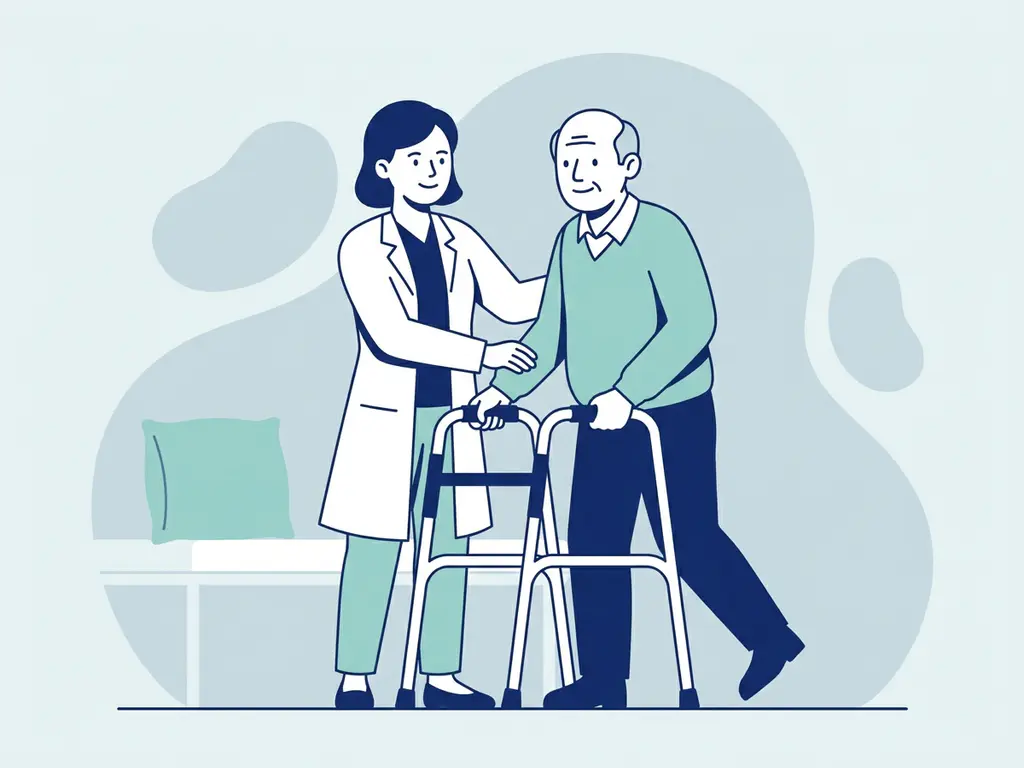
Preparing for a hip operation starts well before you enter the operating room. Physiotherapy in the weeks leading up to surgery, known as prehabilitation, helps strengthen the muscles around the hip, improve mobility, and build the physical resilience needed for a smoother recovery. Anyone in the Den Bosch region facing a planned hip replacement can benefit significantly from starting this process early.
The questions below cover everything you need to know about preparing for hip surgery through physiotherapy, from what exercises to do to when to start and who can help.
What does preparing for a hip operation actually involve?
Preparing for a hip operation involves a structured programme of physical exercises, movement education, and pain management strategies carried out in the weeks before surgery. The goal is to arrive at the operating table as strong and mobile as possible, which directly influences how quickly and completely you recover afterwards.
Preparation typically covers three main areas. First, strengthening the muscles around the hip and thigh, which will need to carry more load during the early recovery phase. Second, improving your range of motion so the joint moves as freely as possible going into surgery. Third, learning practical skills such as how to use walking aids, how to get in and out of bed safely, and what movements to avoid after the procedure.
Beyond the physical side, preparation also involves understanding what to expect. Knowing the typical recovery timeline, recognising which sensations are normal after surgery, and setting realistic goals all reduce anxiety and help you engage more actively in your rehabilitation.
How does physiotherapy improve hip surgery outcomes?
Physiotherapy improves hip surgery outcomes by increasing the strength and endurance of the muscles that support the joint before the operation takes place. Patients who arrive at surgery with stronger hip and leg muscles typically regain mobility faster, spend less time in hospital, and report higher confidence during recovery.
The mechanism behind this is straightforward. Surgery temporarily disrupts muscle function around the hip. If those muscles were already weak before the procedure, the disruption compounds existing limitations. If they were well-conditioned beforehand, the body has more capacity to absorb that disruption and bounce back.
Physiotherapy also trains the nervous system. Movement patterns, balance, and coordination all improve with guided exercise, and these neurological gains carry over into the post-operative period. Patients who have practised controlled movement before surgery tend to feel less disoriented and more capable when they begin rehabilitation after the procedure.
What exercises should you do before a hip replacement?
Before a hip replacement, the most effective exercises focus on strengthening the quadriceps, gluteal muscles, and hip abductors, while maintaining as much range of motion as the joint currently allows. These muscle groups do the most work during walking, stair climbing, and rising from a chair, which are the core functional goals of early recovery.
Exercises commonly recommended in the pre-operative phase include:
- Straight leg raises: Performed lying down, these activate the quadriceps without placing load on the hip joint itself.
- Seated knee extensions: Useful for those with limited standing tolerance, building thigh strength from a supported position.
- Glute bridges: Lying on your back with knees bent, lifting the hips to activate the gluteal muscles and lower back stabilisers.
- Standing hip abduction: Lifting the leg sideways while holding a stable surface, targeting the muscles that stabilise the pelvis during walking.
- Calf raises: Supporting circulation and lower leg strength, which matters for mobility and reducing swelling after surgery.
The exact programme should always be tailored to your current mobility, pain levels, and the specific condition of your hip. A physiotherapist will adjust exercises to stay within a safe and productive range for your individual situation.
How soon before surgery should physiotherapy start?
Physiotherapy should ideally start between four and eight weeks before a planned hip operation. This window provides enough time to build meaningful strength and mobility gains without risking fatigue or overload in the days immediately before surgery.
Starting earlier is rarely harmful and often beneficial, particularly if your hip has been causing significant limitations for some time. Muscles that have been underused due to pain can take several weeks just to reactivate effectively, which means the sooner you begin, the more functional capacity you can rebuild before the operation.
Starting later, even just two to three weeks before surgery, still delivers value. Even a short pre-operative programme improves muscle awareness, teaches safe movement habits, and reduces anxiety about the recovery process. No preparation is wasted, regardless of how close the operation date is.
What is the difference between prehabilitation and rehabilitation?
Prehabilitation is the physiotherapy programme completed before surgery to prepare the body, while rehabilitation is the recovery programme that begins after surgery to restore function. Both are essential parts of the full treatment journey, and the quality of prehabilitation directly shapes the starting point for rehabilitation.
In prehabilitation, the focus is on building strength, improving mobility, and developing the movement skills and knowledge you will need after the operation. The body is still intact, which means a wider range of exercises and higher training loads are generally possible.
Rehabilitation begins once the surgical wound has stabilised, typically within days of the procedure. The focus shifts to safely restoring range of motion, rebuilding muscle function around the new joint, and gradually returning to daily activities such as walking, climbing stairs, and eventually more demanding movements. Progress is closely monitored, and the programme evolves as the joint heals.
Patients who complete a structured prehabilitation programme often begin rehabilitation from a stronger baseline, which can translate into faster milestones and greater confidence throughout the recovery process.
Can physiotherapy in Den Bosch help if surgery is not yet confirmed?
Yes, physiotherapy is highly valuable even when surgery has not yet been confirmed. Many people with hip osteoarthritis live with significant pain and mobility limitations for months or years before a surgical decision is made. Physiotherapy during this period can reduce pain, improve function, and in some cases delay or reduce the need for surgery altogether.
Guided exercise therapy increases the load capacity of the hip joint by strengthening the surrounding muscles, which reduces the mechanical stress placed on the joint itself. This does not reverse the underlying cartilage changes of osteoarthritis, but it can meaningfully reduce symptoms and improve day-to-day quality of life.
If surgery does eventually become the right path, patients who have been exercising consistently will enter the pre-operative phase in a much stronger position than those who have been inactive. Starting physiotherapy now, regardless of where you are in the decision-making process, is always a step in the right direction.
Hoe Vief Leven helpt bij voorbereiding op een heupoperatie
Vief Leven is een gespecialiseerde fysiotherapiepraktijk gericht op heup- en knieartrose, met vestigingen in de regio Tilburg die ook bereikbaar zijn voor mensen uit Den Bosch en omgeving. De praktijk begeleidt patiënten zowel vóór als na een heupoperatie, met een persoonlijke aanpak die is afgestemd op jouw specifieke situatie en doelen.
Wat Vief Leven onderscheidt in de voorbereiding op heupchirurgie:
- Persoonlijk behandelplan: Op basis van jouw klachten, beweeggeschiedenis en operatiedatum wordt een op maat gemaakt programma samengesteld.
- Data-gedreven voortgang: Met behulp van geavanceerde trainingsapparatuur wordt jouw voortgang nauwkeurig gevolgd, zodat het programma snel kan worden bijgesteld waar nodig.
- Kennis en zelfregie: Naast oefentherapie krijg je concrete informatie over jouw heup, de operatie en het herstelproces, zodat je goed voorbereid en zelfverzekerd de ingreep ingaat.
- Continuïteit van zorg: Vief Leven begeleidt je ook na de operatie, inclusief fysiotherapie aan huis in de vroege herstelfase als dat nodig is.
Of je nu al een operatiedatum hebt of nog twijfelt over de volgende stap, bij Vief Leven ben je aan het juiste adres voor gespecialiseerde begeleiding bij heupklachten en artrose. Bekijk het aanbod op viefleven.nl of maak direct een afspraak om te starten met jouw persoonlijke voorbereidingstraject.
Veelgestelde vragen
How do I know if I'm doing my pre-operative exercises correctly at home?
The best way to ensure correct form is to have your exercises demonstrated and assessed by a physiotherapist before practising them independently. Poor technique can reinforce incorrect movement patterns or aggravate the hip rather than help it. Ask your physiotherapist to record a short video of you performing each exercise during your session, or request a printed guide with clear descriptions. If you experience sharp pain, joint clicking with discomfort, or unusual swelling after exercising, contact your physiotherapist before continuing.
What if my hip pain is too severe to exercise before surgery?
Significant pain does not necessarily mean exercise is off the table — it means the programme needs to be carefully adapted. A physiotherapist experienced in hip conditions can identify exercises that load the surrounding muscles without aggravating the joint, such as seated or lying-down movements that avoid weight-bearing entirely. Pain management strategies, including appropriate timing of any prescribed medication before sessions, can also make exercise more accessible. Even gentle, low-load activity provides meaningful benefit when more demanding exercises are not yet tolerable.
Are there any movements or activities I should avoid in the weeks before my hip replacement?
In the weeks before surgery, it is generally wise to avoid high-impact activities such as running, jumping, or sports that involve sudden changes of direction, as these place significant stress on an already compromised joint. Movements that consistently reproduce sharp or severe pain should also be modified or temporarily avoided. Your physiotherapist and surgeon can provide specific guidance based on the current state of your hip and the type of implant planned, as some surgical approaches come with particular movement precautions that begin immediately after the operation.
Can I continue my prehabilitation exercises if my surgery date gets postponed?
Yes, and in most cases you should. A postponed surgery date simply means more time to build strength and mobility, which is rarely a disadvantage. Continue your programme at the level you have reached, and inform your physiotherapist about the change so they can adjust the plan accordingly — for example, progressing to slightly more challenging exercises if there is now more time available. Maintaining consistency also keeps you mentally engaged with the recovery process and prevents deconditioning while you wait.
How quickly can I expect to walk independently after a hip replacement if I've completed prehabilitation?
Most patients who have completed a structured prehabilitation programme are able to walk with a walking aid within one to two days of surgery, and many progress to independent walking within four to six weeks, though individual timelines vary. Prehabilitation does not eliminate the recovery period, but it tends to compress it — patients often reach key milestones such as stair climbing and unassisted walking somewhat earlier than those who did not prepare. Your surgeon and physiotherapist will give you a more personalised timeline based on your specific procedure and overall health.
What is the biggest mistake people make when preparing for hip surgery?
The most common mistake is waiting too long to start — either assuming that rest is the best preparation, or delaying until just a week or two before the operation. Muscles that have been underloaded due to chronic hip pain can take several weeks just to reactivate, meaning a late start limits how much progress is realistically achievable. A close second mistake is exercising without professional guidance, which risks reinforcing poor movement habits or overloading the wrong structures. Starting early with a physiotherapist-led programme gives you the best possible foundation for surgery and recovery.
Does prehabilitation also help with managing post-operative pain?
Yes, there is good evidence that patients who complete prehabilitation tend to report lower pain levels and reduced reliance on pain medication in the early post-operative period. Part of this is physiological — stronger muscles provide better joint support and reduce strain on healing tissues. Part of it is psychological — patients who are well-prepared tend to feel less anxious, and lower anxiety is consistently associated with better pain tolerance and faster recovery. Understanding what post-operative sensations are normal, which is covered in a good prehabilitation programme, also prevents unnecessary distress during the healing process.