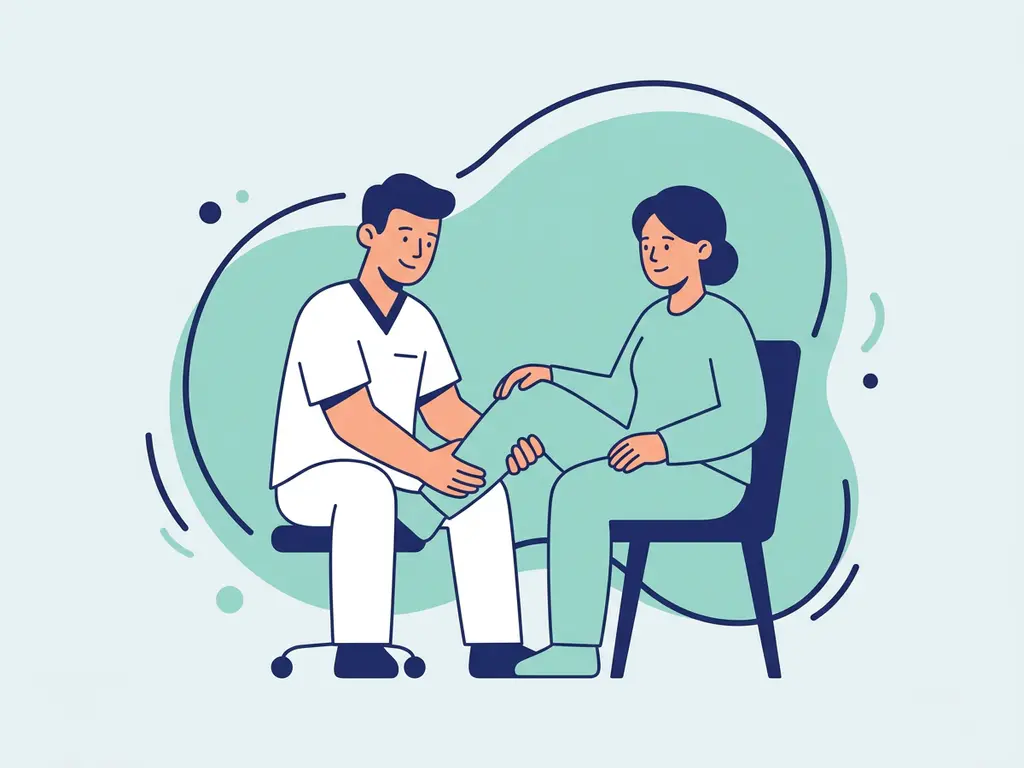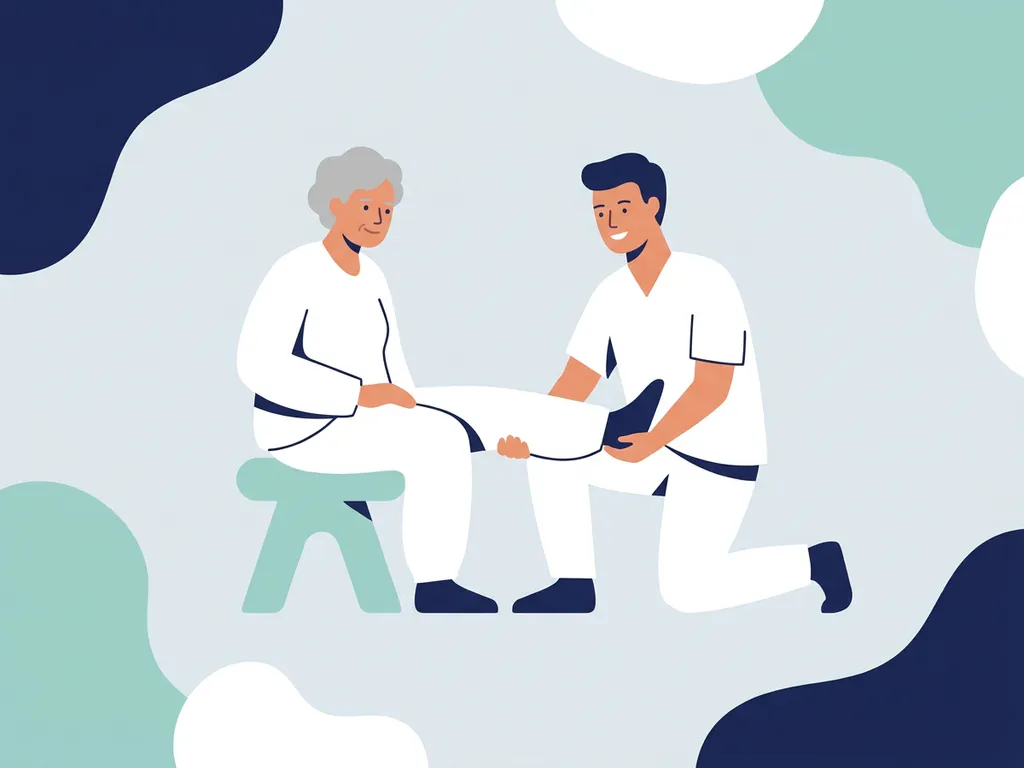
Physiotherapy after knee surgery in the Eindhoven region helps you regain strength, mobility, and confidence in your joint as quickly and safely as possible. A structured rehabilitation programme guided by a specialised physiotherapist is the most effective way to recover well and reduce the risk of long-term complications. The sections below answer the most important questions people ask about knee rehabilitation after an operation.
What does physiotherapy after knee surgery actually involve?
Physiotherapy after knee surgery is a structured rehabilitation process that restores movement, builds muscle strength around the joint, and helps you return to daily activities safely. It combines manual therapy, targeted exercise, education about your joint, and progress monitoring to ensure your recovery stays on track and adapts to how your knee is responding.
In the early phase, the focus is on managing swelling, restoring basic range of motion, and getting you safely upright and moving. As recovery progresses, the programme shifts toward strengthening the muscles that support the knee, improving balance and coordination, and rebuilding the confidence to perform everyday tasks like climbing stairs, walking longer distances, or getting up from a chair without pain or hesitation.
Throughout the entire process, a good physiotherapist monitors how your knee is loading and adapts the programme accordingly. This personalised approach is what separates effective rehabilitation from generic exercise routines.
How soon after a knee operation should physiotherapy start?
Physiotherapy after a knee operation typically begins within the first 24 to 48 hours after surgery, often while you are still in the hospital. Early mobilisation is not just possible in most cases — it is actively recommended, because moving the joint gently from the start reduces swelling, prevents stiffness, and supports healthy tissue healing.
The initial sessions are gentle and focused on basic movements such as bending and straightening the knee, activating the quadriceps, and taking supervised steps. The pace of progression depends on the type of surgery, your overall fitness level, and how your body responds in the first days and weeks.
Delaying the start of physiotherapy, even by a few days, can lead to increased stiffness and slower overall recovery. This is why having a rehabilitation plan in place before the operation is strongly advisable.
What exercises are used during knee rehabilitation?
Knee rehabilitation exercises progress through several phases, starting with gentle activation movements and building toward functional strength training. The specific exercises used depend on the stage of recovery, but a well-structured programme typically covers muscle activation, range of motion work, strength building, and functional movement training.
- Quadriceps sets and straight leg raises: Early exercises that activate the thigh muscles without stressing the joint.
- Heel slides and knee bends: Gradually restore the range of motion in the knee.
- Mini squats and step exercises: Introduce controlled loading as strength improves.
- Balance and proprioception training: Rebuild the joint’s stability and coordination, which is often disrupted after surgery.
- Cycling on a stationary bike: A low-impact way to improve mobility and build endurance in the later stages.
The exercises are always tailored to the individual. Factors such as age, pre-operative fitness, and the specific type of knee surgery all influence which exercises are appropriate and at what intensity they should be performed.
Should physiotherapy take place at a clinic or at home after knee surgery?
Both settings have a role in knee rehabilitation, and the most effective recovery often combines both. In the very early days after surgery, when mobility is limited, physiotherapy at home is practical and appropriate. As your condition improves, attending a clinic offers access to specialist equipment, better progress monitoring, and a more structured training environment.
Home-based physiotherapy is particularly valuable in the first one to two weeks after a knee replacement, when travelling to a clinic can be difficult and exhausting. A physiotherapist who visits you at home can assess your living environment, help you navigate stairs safely, and guide you through exercises that match your current level of function.
Clinic-based rehabilitation becomes increasingly important as recovery advances. A well-equipped practice with specialised training technology allows for more precise load management and data-driven adjustments that are simply not possible at home. The combination of both settings gives patients the best of each phase of recovery.
What is prehabilitation and does it improve recovery after knee surgery?
Prehabilitation, often called prehab, is physiotherapy that takes place before a knee operation with the goal of strengthening the joint and surrounding muscles ahead of surgery. Research consistently supports the idea that patients who are physically stronger and better informed before their operation tend to recover faster and more completely afterward.
The reasoning is straightforward. Surgery places significant demands on the body, and a knee that enters the operating room with better muscle support, greater range of motion, and lower levels of inflammation is better positioned to heal efficiently. Prehab also prepares patients mentally — they understand what to expect, they know the exercises they will use post-operatively, and they feel more in control of the process.
Prehabilitation does not need to be intensive. Even a few weeks of targeted exercise and education before surgery can make a meaningful difference to how quickly you regain function and confidence in your knee afterward.
Where can you find specialised knee rehabilitation near Eindhoven?
For people in the Eindhoven region looking for specialised knee rehabilitation, Vief Leven in Tilburg offers a focused and highly personalised approach to recovery after knee surgery. The practice specialises exclusively in hip and knee complaints, including osteoarthritis and post-operative rehabilitation, which means every aspect of their care is built around this specific type of patient.
What makes Vief Leven a strong choice for knee rehabilitation near Eindhoven includes:
- The Vief Method: A three-step approach that builds a personalised treatment plan, provides clear information about your specific situation, and activates the body through targeted exercise therapy to increase load capacity.
- Advanced training technology: The practice uses air pressure technology equipment that enables data-driven progress monitoring and precise adjustments to your programme at every stage of recovery.
- Pre-operative preparation: Vief Leven helps patients prepare for surgery through prehabilitation, so they go into the operation as fit and informed as possible.
- Physiotherapy at home: For patients in the early post-operative phase, home visits are available to support recovery when travelling to the clinic is not yet feasible.
- The Vitaliteitsclub: A unique space where people with knee osteoarthritis can exercise safely and effectively under specialist guidance to work toward lasting improvement.
Whether you are preparing for a knee osteoarthritis treatment plan, recovering from a knee replacement, or looking for expert guidance at any stage of your rehabilitation journey, Vief Leven offers the specialisation and personal attention to help you move forward with confidence. Make an appointment and take the first step toward a stronger, more active recovery.
Veelgestelde vragen
How long does a full knee rehabilitation programme typically take?
The total duration of knee rehabilitation depends on the type of surgery performed. A meniscus repair or ACL reconstruction typically requires 3 to 6 months of structured rehabilitation, while a total knee replacement can take anywhere from 3 to 12 months before full function is restored. Factors such as your age, pre-operative fitness, and how consistently you follow your programme all influence the timeline. Your physiotherapist will set realistic milestones at each stage so you always know where you stand in your recovery.
What are the most common mistakes people make during knee rehabilitation?
The two most common mistakes are doing too much too soon and not doing enough out of fear of pain or re-injury. Pushing through sharp pain or skipping rest periods can aggravate the healing tissue, while excessive caution leads to muscle weakness and prolonged stiffness. Another frequent mistake is stopping physiotherapy as soon as pain disappears, even though the muscles and joint may not yet have regained full strength and stability. Following a structured, professionally guided programme helps you avoid both extremes.
Is it normal to still experience pain and swelling weeks after knee surgery?
Yes, some degree of swelling and discomfort in the weeks following knee surgery is completely normal and expected. The knee joint is highly sensitive, and the healing process involves significant tissue remodelling that can cause intermittent pain and puffiness, particularly after activity. However, sudden increases in swelling, warmth, or sharp pain that does not settle with rest should always be reported to your physiotherapist or surgeon, as these can occasionally signal complications. Consistent monitoring by your physiotherapist helps distinguish normal healing responses from signs that need medical attention.
Can I return to sports or physically demanding activities after knee surgery, and how will I know when I am ready?
Returning to sport or demanding physical activity is absolutely achievable for many patients, but it should only happen once specific functional criteria are met — not simply when a fixed number of weeks have passed. Your physiotherapist will assess factors such as strength symmetry between both legs, balance, movement quality, and your confidence under load before clearing you for higher-impact activities. Returning too early is one of the leading causes of re-injury, so this decision should always be made collaboratively with your rehabilitation team rather than based on how you feel on a good day.
Do I need a referral from my GP or surgeon to start physiotherapy after knee surgery?
In the Netherlands, you do not need a GP referral to access physiotherapy — you can contact a physiotherapy practice directly. However, it is always a good idea to coordinate with your surgeon so that your physiotherapist receives relevant information about the procedure performed, any restrictions that apply, and the expected healing timeline. Many hospitals provide a discharge plan that includes physiotherapy guidance, and some practices, like Vief Leven, work closely with surgical teams to ensure continuity of care from the operating room through to full recovery.
What role does nutrition and lifestyle play in recovering from knee surgery?
Nutrition and lifestyle choices have a significant but often overlooked impact on how quickly and completely you recover. Adequate protein intake supports muscle rebuilding, while anti-inflammatory foods such as oily fish, vegetables, and whole grains can help manage post-operative swelling. Staying well hydrated, getting sufficient sleep, and avoiding smoking are also important, as smoking in particular is known to impair tissue healing and increase the risk of complications. Discussing these factors with your physiotherapist or a dietitian can help you optimise your recovery from every angle, not just the physical exercise component.
What should I look for when choosing a physiotherapist for knee rehabilitation near Eindhoven?
When selecting a physiotherapist for post-operative knee rehabilitation, look for a practice that specialises specifically in knee and hip conditions rather than offering general physiotherapy across all areas. Specialisation means the therapist has deeper knowledge of knee anatomy, surgical procedures, and the nuances of post-operative recovery. It is also worth asking whether the practice offers both home visits and clinic-based sessions, uses evidence-based rehabilitation protocols, and has access to specialised equipment for load monitoring and progress tracking. A good physiotherapist will also take time to understand your personal goals — whether that is returning to sport, climbing stairs comfortably, or simply living pain-free — and build your programme around them.