Recovery from a knee replacement typically takes between 3 and 6 months before most people return to daily activities with confidence. Full recovery, including restored strength and mobility, can take up to 12 months. The timeline varies significantly depending on your physical condition before surgery, the quality of your rehabilitation, and how consistently you follow your physiotherapy program. The questions below unpack exactly what shapes that recovery and what you can do to make it go as smoothly as possible.
How long does recovery from a knee replacement typically take?
Most people recover well enough to walk independently and manage daily activities within 6 to 12 weeks after a knee replacement. Returning to more demanding activities such as cycling, swimming, or walking longer distances generally takes 3 to 6 months. Complete recovery, where the knee feels strong, stable, and close to normal, often takes a full year.
It helps to think of recovery in phases rather than as a single finish line. In the first two weeks, the focus is on reducing swelling, regaining basic movement, and safely getting around the home. Between weeks two and six, mobility improves steadily and strength training becomes more central. From three months onward, the goal shifts toward rebuilding confidence, endurance, and the ability to return to the activities that matter most to you.
Every person’s recovery is unique. Someone who was physically active before surgery and received consistent physiotherapy guidance tends to progress faster than someone who was more sedentary or who did not start rehabilitation promptly.
What factors affect how quickly you recover from a knee replacement?
Several key factors influence the speed and quality of recovery after a knee replacement. These include your physical fitness before surgery, your age, the presence of other health conditions, how soon physiotherapy begins, and how actively you engage with your rehabilitation exercises. No single factor determines the outcome on its own.
Pre-operative fitness plays a particularly important role. Patients who enter surgery with stronger leg muscles and better cardiovascular fitness consistently recover faster. This is because the muscles around the knee are already capable of supporting the joint from day one of rehabilitation.
Other meaningful factors include:
- Body weight: Carrying excess weight places more load on the healing joint and can slow progress.
- Pain management: Poorly controlled pain limits movement and reduces the quality of physiotherapy sessions.
- Motivation and consistency: Daily home exercises between sessions are just as important as the sessions themselves.
- Support at home: Having practical help during the first weeks reduces physical strain and lowers the risk of falls.
- Underlying conditions: Conditions such as rheumatoid arthritis or diabetes can affect healing speed and require tailored rehabilitation.
What does physiotherapy after a knee replacement actually involve?
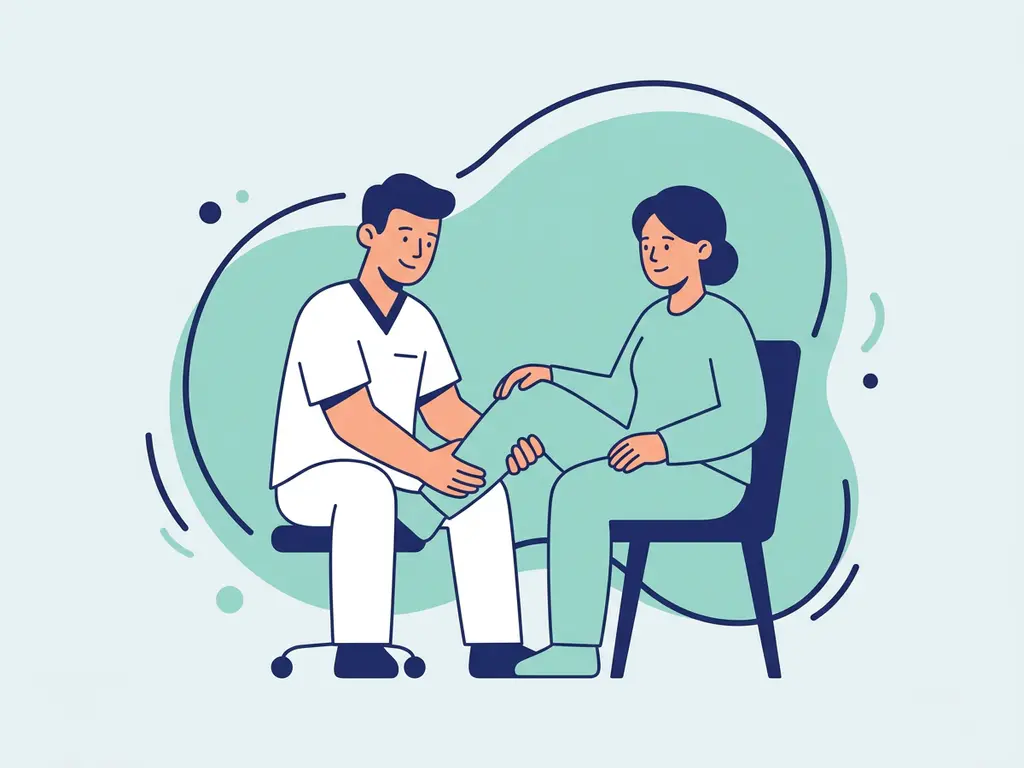
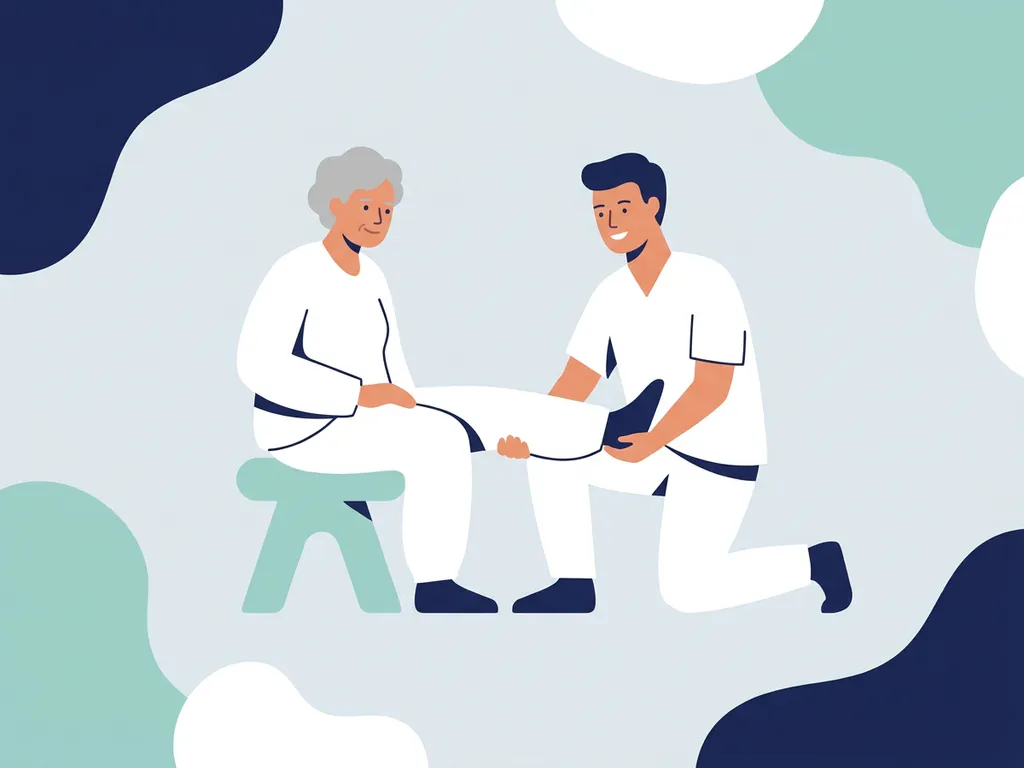
Physiotherapy after a knee replacement involves a structured program of exercises, movement training, and education designed to restore strength, flexibility, and function in the operated leg. It progresses in stages, starting with basic mobility and advancing toward strength and endurance as the joint heals.
In the early phase, the physiotherapist focuses on reducing swelling through movement, teaching safe techniques for standing and walking, and restoring basic range of motion in the knee. Exercises at this stage are gentle but essential for preventing stiffness.
As recovery progresses, the program shifts toward strengthening the quadriceps, hamstrings, and hip muscles that support the knee. Balance training is introduced to rebuild stability and reduce the risk of falls. Later phases incorporate more functional movements that mirror real daily activities, such as climbing stairs, getting in and out of a car, and walking on uneven surfaces.
Throughout the entire process, a good physiotherapist also provides education: explaining what is happening in the knee, what sensations are normal, and how to adjust activity levels day to day. This combination of physical training and informed guidance is what makes physiotherapy genuinely effective rather than simply going through the motions.
When should physiotherapy start after knee replacement surgery?
Physiotherapy should begin within 24 hours of knee replacement surgery. In most hospitals, a physiotherapist will help you stand and take your first steps on the day of or the day after the operation. Early movement is not just safe — it is essential for reducing swelling, preventing blood clots, and setting the foundation for a good recovery.
Delaying the start of physiotherapy, even by a few days, can allow stiffness to develop in the joint, which then becomes harder to reverse. The body begins forming scar tissue quickly after surgery, and movement in the early days helps keep that process from limiting your eventual range of motion.
Once discharged from hospital, continuing physiotherapy without interruption is equally important. Whether that takes place at a clinic, at home, or a combination of both, the consistency of the program in the first six to eight weeks has a direct impact on long-term outcomes.
What are normal symptoms during knee replacement recovery?
Normal symptoms after knee replacement surgery include swelling around the knee, warmth in the joint, stiffness especially in the morning, clicking or clunking sounds from the new joint, and some degree of pain or discomfort during exercises. These are expected parts of the healing process and typically improve steadily over the first few months.
Swelling is often the most persistent and surprising symptom. It can continue for several months and tends to increase after activity before gradually settling. Elevating the leg and applying ice can help manage this in the early weeks.
Clicking or clunking sensations from the new joint are common and generally harmless. They occur because the artificial components move slightly differently than natural cartilage. Most patients find these sounds reduce or disappear as the surrounding muscles strengthen.
However, some symptoms do warrant prompt contact with your doctor or physiotherapist:
- Sudden increase in pain, particularly after a period of improvement
- Redness, heat, or discharge around the wound
- Fever or flu-like symptoms
- Significant swelling in the calf, which can indicate a blood clot
- The knee giving way unexpectedly
Knowing the difference between expected discomfort and warning signs reduces anxiety and helps you make better decisions during recovery.
How can you prepare for knee replacement surgery to recover faster?
Preparing for knee replacement surgery before the operation, a practice known as prehabilitation, can meaningfully shorten recovery time and improve outcomes. Strengthening the muscles around the knee, improving cardiovascular fitness, managing body weight, and learning what to expect from rehabilitation all contribute to a faster and smoother recovery.
Prehabilitation typically involves targeted exercises for the quadriceps, hamstrings, and glutes, combined with low-impact cardiovascular activity such as cycling or swimming. The stronger these muscles are going into surgery, the more capable they are of supporting the new joint from the very first day of rehabilitation.
Practical preparation also matters. Arranging your home to reduce fall risks, setting up a recovery space on the ground floor if possible, and organizing help for the first two to three weeks all reduce stress and physical strain in the early days after surgery.
Mental preparation is equally valuable. Understanding what the recovery process involves, what symptoms are normal, and what milestones to expect at each stage reduces fear and helps you stay motivated when progress feels slow.
Hoe Vief Leven helpt bij herstel na een knieprothese
Bij Vief Leven in Tilburg begrijpen we dat herstel na een knieprothese voor iedereen anders verloopt. Onze aanpak is dan ook volledig persoonlijk: we bouwen een behandelplan dat past bij jouw situatie, jouw klachten en jouw doelen. Of je nu voor de operatie wilt werken aan je conditie of na de ingreep begeleiding nodig hebt, wij staan voor je klaar.
Wat Vief Leven onderscheidt:
- Gespecialiseerde fysiotherapie gericht op knieklachten en herstel na knieoperaties
- Prehabilitatie: voorbereiding op de operatie zodat je sterker en fitter aan de ingreep begint
- Fysiotherapie aan huis in de vroege herstelfase, wanneer zelf naar de praktijk nog te zwaar is
- Geavanceerde trainingsapparatuur met luchtdruktechnologie voor een data-gedreven en nauwkeurig revalidatieprogramma
- Toegang tot de Vitaliteitsclub: een veilige omgeving om te blijven bewegen en werken aan herstel
- Voortdurende monitoring en bijsturing van het behandelplan op basis van jouw voortgang
Wil je weten hoe wij jou kunnen helpen bij een sneller en beter herstel na je knieprothese? Maak een afspraak en ontdek wat de persoonlijke aanpak van Vief Leven voor jou kan betekenen. Meer weten over vergoedingen? Bekijk dan onze kostenpagina.
Veelgestelde vragen
How much pain is normal during physiotherapy exercises, and when should I push through it?
A mild to moderate ache during and after exercise is expected and generally safe to work through — this is often described as discomfort rather than sharp or worsening pain. A useful guideline is the ‘0–10 pain scale rule’: if your pain during exercise stays at or below a 4 out of 10 and returns to your baseline level within 30 minutes of finishing, you are likely working within a safe range. Sharp, sudden, or escalating pain is a signal to stop and consult your physiotherapist before continuing.
What happens if I skip my home exercises between physiotherapy sessions?
Skipping home exercises significantly slows your recovery, particularly in the first 6 to 8 weeks when consistency has the greatest impact on long-term outcomes. The knee joint responds to frequent, repeated movement — a single weekly session with a physiotherapist is not enough stimulus on its own to rebuild strength and prevent stiffness. Even 10 to 15 minutes of prescribed exercises twice a day at home can make a measurable difference to how quickly you regain function and independence.
Is it safe to walk on stairs during knee replacement recovery, and when can I start?
Stair climbing is typically introduced in the early phase of rehabilitation, often within the first week or two after surgery, starting with a step-to-step technique where you lead with the non-operated leg going up and the operated leg going down. Your physiotherapist will guide you through this progression safely and ensure you have the strength and balance needed before advancing. Using a handrail and taking your time is essential in the early stages, and most people return to a normal alternating stair pattern within 6 to 12 weeks.
How do I know if my knee replacement recovery is on track or falling behind?
Key milestones to look out for include walking independently without a frame by around 4 to 6 weeks, bending the knee to at least 90 degrees by 6 to 8 weeks, and returning to most daily activities with confidence by 3 months. If you are significantly behind on these markers, or if your pain and swelling are not gradually improving, it is worth raising this with your physiotherapist or surgeon promptly. Recovery rarely follows a perfectly straight line, but a lack of progress over two or more consecutive weeks is worth investigating.
Can I do too much too soon after knee replacement surgery, and what are the signs of overdoing it?
Yes — pushing too hard too soon is a common mistake that can increase swelling, aggravate the healing tissue, and set your recovery back by days or even weeks. Signs that you have overdone it include a noticeable spike in swelling that does not settle after rest and elevation, pain that remains elevated the morning after activity, or increased stiffness that was not present the day before. If this happens, reduce your activity level for 24 to 48 hours, apply ice, and discuss your current program with your physiotherapist to recalibrate the intensity.
When can I return to sports or more active hobbies after a knee replacement?
Low-impact activities such as swimming and cycling are typically safe to resume around the 3-month mark, while walking on varied terrain and light hiking are often possible by 4 to 6 months. High-impact activities such as running, racket sports, or skiing are generally discouraged after a total knee replacement, as they place significant stress on the artificial joint and can accelerate wear. Your surgeon and physiotherapist are the best people to advise on which specific activities are appropriate for your implant type and recovery progress.
What is the single most important thing I can do to improve my recovery outcome?
Consistency with your physiotherapy program — both in clinic and at home — is the single most influential factor within your control. The research is clear that patients who engage actively and regularly with rehabilitation achieve significantly better outcomes in strength, mobility, and quality of life than those who are passive or irregular. Treating your recovery like a daily commitment rather than something that happens only during scheduled appointments will have a greater impact on your long-term result than almost any other variable.