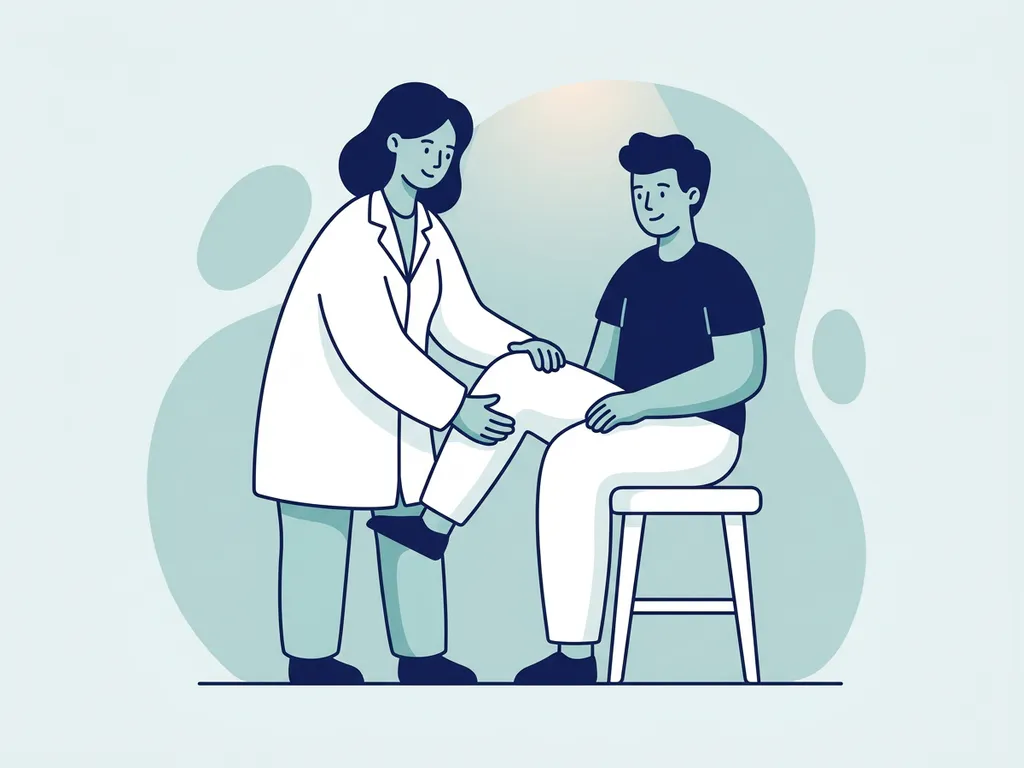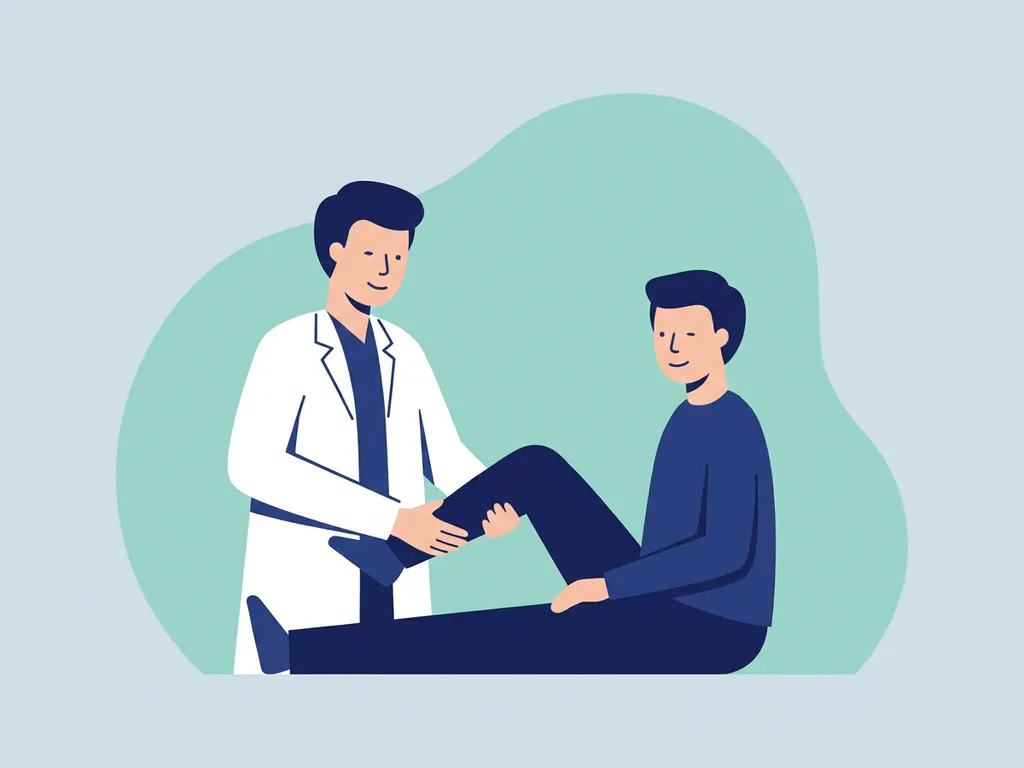
The most effective exercises for knee osteoarthritis are low-impact, strength-building movements that support the joint without overloading it. Activities like leg raises, seated knee extensions, cycling, and water-based exercises are consistently recommended by physiotherapists for people with knee complaints. For residents of the Eindhoven region, specialized physiotherapy guidance ensures these exercises are tailored to your specific situation and stage of progression.
Knee osteoarthritis affects the cartilage that cushions the knee joint, making movement painful and stiff. The good news is that targeted exercise therapy is one of the most evidence-supported ways to reduce pain, improve mobility, and slow the progression of complaints. The sections below answer the most common questions about exercising with knee osteoarthritis.
Which exercises are most effective for knee osteoarthritis?
The most effective exercises for knee osteoarthritis are those that strengthen the muscles around the knee, improve joint stability, and maintain range of motion without placing excessive stress on the cartilage. Quadriceps strengthening, hip abductor exercises, and low-impact aerobic activities form the foundation of an effective exercise program for knee osteoarthritis.
The following exercises are widely used in physiotherapy for knee osteoarthritis:
- Straight leg raises: Strengthen the quadriceps without bending the knee under load, reducing joint stress.
- Mini squats and wall sits: Build functional leg strength in a controlled range of motion.
- Seated knee extensions: Target the front of the thigh to better support the kneecap.
- Hip abductor exercises: Strengthen the outer hip and glutes, reducing force through the knee during walking.
- Cycling (stationary or outdoor): Maintains cardiovascular fitness and joint mobility with minimal impact.
- Swimming and water aerobics: Allow full-body movement, with the buoyancy of water reducing joint load.
The key principle is progressive loading: starting gently and gradually increasing resistance as the joint and surrounding muscles adapt. Exercises should never be chosen arbitrarily but matched to your current fitness level, pain threshold, and the specific demands of your daily life.
How does exercise reduce knee osteoarthritis pain?
Exercise reduces knee osteoarthritis pain primarily by strengthening the muscles that support and stabilize the knee joint, which decreases the mechanical load placed on the damaged cartilage. Stronger muscles act as shock absorbers, redistributing forces away from sensitive joint surfaces and reducing inflammation over time.
Beyond muscle strengthening, regular movement stimulates the production of synovial fluid, the natural lubricant inside the knee joint. This improved lubrication helps the joint move more smoothly and reduces the stiffness that many people experience, especially in the morning or after sitting for extended periods.
Exercise also has a systemic effect: it reduces low-grade inflammation throughout the body, improves circulation to joint tissues, and supports a healthy body weight, all of which contribute to less pressure on the knee. For many people, consistent exercise therapy leads to a meaningful reduction in daily pain and a noticeable improvement in how far and how comfortably they can walk.
What exercises should you avoid with knee osteoarthritis?
People with knee osteoarthritis should avoid high-impact exercises and movements that place sudden, heavy loads on an already compromised joint. Running on hard surfaces, deep squats, lunges with a heavy load, and high-intensity interval training with jumping movements can aggravate cartilage damage and increase inflammation.
Specific movements to approach with caution include:
- Deep squats and full knee bends: These place maximum pressure on the kneecap and joint surfaces.
- Running on hard surfaces: Repetitive impact can worsen cartilage wear over time.
- Sports with sudden direction changes: Such as tennis or football, which create unpredictable lateral forces on the knee.
- Stair climbing with heavy loads: Increases compressive force significantly beyond normal walking.
- Exercises through sharp or worsening pain: Mild discomfort during exercise can be normal, but sharp or lasting pain is a signal to stop and reassess.
It is worth noting that avoidance is not always the right answer. A physiotherapist can assess whether an exercise that feels uncomfortable is actually harmful or simply unfamiliar to a deconditioned joint. The goal is to find the right balance between challenge and protection.
How often should someone with knee osteoarthritis exercise?
Someone with knee osteoarthritis should aim to exercise at least three to five times per week, combining strength training sessions with daily low-impact movement such as walking or cycling. Consistency matters more than intensity: short, regular sessions are more beneficial than infrequent, strenuous ones.
A practical weekly structure might look like this:
- Two to three strength sessions: Focused on quadriceps, hip, and core exercises.
- Daily low-impact activity: A 20 to 30 minute walk, swim, or cycle at a comfortable pace.
- Stretching and mobility work: Brief sessions to maintain range of motion in the knee and surrounding joints.
Rest days are important, but complete inactivity is counterproductive. On days when the knee feels more painful or swollen, lighter activity such as gentle walking or water exercises is preferable to full rest. Over time, the body adapts and the threshold for discomfort typically rises, allowing for more varied and demanding activity.
Can physiotherapy in Eindhoven help with knee osteoarthritis?
Yes, physiotherapy is one of the most effective treatments for knee osteoarthritis and is strongly recommended before considering surgical options. For people in and around Eindhoven, access to specialized physiotherapy means receiving a structured, personalized exercise program that directly addresses the specific stage and severity of your knee complaints.
Physiotherapy for knee osteoarthritis typically includes an initial assessment to understand how the joint is functioning, which movements are restricted, and which daily activities are most affected. From this starting point, a treatment plan is built that progresses in line with your improvement. Physiotherapists also provide education about the condition, helping patients understand what is happening in their joint and what they can do independently to support their recovery.
The combination of hands-on guidance, progressive exercise therapy, and self-management education is what distinguishes physiotherapy from generic gym exercise. It ensures that the right exercises are chosen, performed correctly, and adjusted as your capacity grows.
When should knee osteoarthritis patients consider surgery instead of exercise therapy?
Knee osteoarthritis patients should consider surgery when conservative treatments, including physiotherapy and exercise therapy, have been consistently applied over several months without sufficient improvement in pain or function. Surgery, typically a total knee replacement, is generally considered a last resort after non-surgical options have been exhausted.
Indicators that surgery may be worth discussing with a specialist include:
- Persistent, severe pain that significantly limits daily activities despite months of physiotherapy.
- Major structural joint damage visible on imaging that limits the effectiveness of exercise therapy.
- Inability to sleep through the night due to knee pain.
- Significant loss of independence in basic tasks such as walking, climbing stairs, or personal care.
It is also worth knowing that physiotherapy before surgery, often called prehabilitation, can significantly improve surgical outcomes. Patients who enter an operation with stronger muscles and better joint awareness tend to recover faster and more completely. After surgery, guided rehabilitation is equally important to restore full function.
Hoe Vief Leven helpt bij knieartrose in de regio Eindhoven
Vief Leven is a specialized physiotherapy practice focused exclusively on hip and knee osteoarthritis, serving patients in Tilburg and the wider region, including Eindhoven. The practice offers a personal, structured approach built around your specific complaints, daily limitations, and personal goals.
What Vief Leven brings to knee osteoarthritis treatment:
- Personalized treatment plans based on a thorough assessment of your joint function and daily life.
- The Vief Method: a three-step approach combining education, progressive exercise therapy, and integration into daily life.
- State-of-the-art training equipment with air pressure technology for precise, data-driven load management.
- Prehabilitation and postoperative rehabilitation for those preparing for or recovering from knee surgery.
- The Vitaliteitsclub: a dedicated space where people with osteoarthritis can exercise safely under expert supervision.
- Physiotherapy at home for patients in the early stages of recovery after surgery.
Whether you are in the early stages of knee complaints or further along in your journey, Vief Leven provides the expertise and environment to help you move better and regain confidence in daily life. Explore more about knee osteoarthritis treatment or visit the Vief Leven website to learn more about the practice. Ready to take the next step? Make an appointment and start your personal treatment journey today.
Veelgestelde vragen
How do I know if my knee pain during exercise is normal or a warning sign to stop?
A useful rule of thumb is the 0–10 pain scale: mild discomfort up to a 3 or 4 during exercise is generally acceptable and often reflects your joint adapting to new demands. However, sharp, stabbing pain, pain that worsens significantly during the activity, or pain and swelling that persist for more than 24 hours after exercise are signals to stop and consult your physiotherapist. The key distinction is between ‘working through discomfort’ and ‘pushing through harm’ — a physiotherapist can help you recognize the difference and adjust your program accordingly.
Is it safe to start exercising on my own, or should I always work with a physiotherapist first?
While gentle activities like short walks or light stretching are generally safe to begin independently, it is strongly advisable to have at least one physiotherapy assessment before starting a structured exercise program for knee osteoarthritis. Without a professional evaluation, it is easy to choose exercises that are either too aggressive for your current joint condition or too passive to produce real improvement. A physiotherapist will identify which movements are appropriate for your specific stage of osteoarthritis, teach you correct technique, and set a realistic starting point — significantly reducing the risk of setbacks.
Will exercising make my knee osteoarthritis worse over time?
This is one of the most common misconceptions about knee osteoarthritis, and the evidence clearly points the other way: appropriate, progressive exercise does not accelerate cartilage damage and is in fact one of the most effective tools for slowing the progression of symptoms. Cartilage relies on movement and loading to receive nutrients, as it has no direct blood supply. What can cause harm is the wrong type of exercise — high-impact, uncontrolled, or excessively loaded movements — which is exactly why a tailored, supervised program is so important.
How long does it typically take to notice improvement from exercise therapy for knee osteoarthritis?
Most people begin to notice meaningful improvements in pain levels and mobility within 6 to 12 weeks of consistent, well-structured exercise therapy. However, the timeline varies depending on the severity of the osteoarthritis, your baseline fitness level, and how regularly you follow the program. It is important to set realistic expectations: exercise therapy for osteoarthritis is a long-term strategy, not a quick fix. The greatest and most lasting benefits — including reduced daily pain, improved walking distance, and better quality of life — tend to build progressively over several months of sustained effort.
Can losing weight really make a difference for knee osteoarthritis, and how does exercise help with that?
Yes — body weight has a direct and significant impact on knee osteoarthritis, because every kilogram of body weight translates to roughly three to four kilograms of additional force through the knee joint during walking. Even a modest weight reduction of 5–10% of body weight has been shown in research to meaningfully reduce knee pain and slow joint deterioration. Low-impact exercise such as cycling, swimming, and walking contributes to weight management while simultaneously building the muscle strength needed to better protect the joint — making it a dual-benefit strategy for people with knee osteoarthritis.
What should I do on days when my knee is more swollen or inflamed than usual?
On days with increased swelling or inflammation — sometimes called ‘flare days’ — the priority is to reduce joint irritation without falling into complete inactivity. Gentle, non-weight-bearing movement such as water exercises or seated cycling at very low resistance can help maintain circulation and reduce stiffness without aggravating the joint. Applying ice for 15–20 minutes, elevating the leg, and temporarily reducing the intensity of your exercise routine are all appropriate responses. If flare-ups are frequent or worsening, it is a good reason to revisit your physiotherapist and reassess your program.
Are there any lifestyle changes beyond exercise that can support my knee osteoarthritis treatment?
Exercise is the cornerstone of knee osteoarthritis management, but several complementary lifestyle adjustments can meaningfully amplify your results. Maintaining a healthy body weight reduces mechanical stress on the joint, while an anti-inflammatory diet rich in vegetables, omega-3 fatty acids, and whole foods may help manage systemic inflammation. Prioritizing quality sleep supports tissue recovery and pain regulation, and pacing your daily activities — avoiding prolonged static positions like sitting or standing for hours — helps prevent unnecessary joint load. Your physiotherapist can help you integrate these habits into a holistic self-management plan alongside your exercise program.