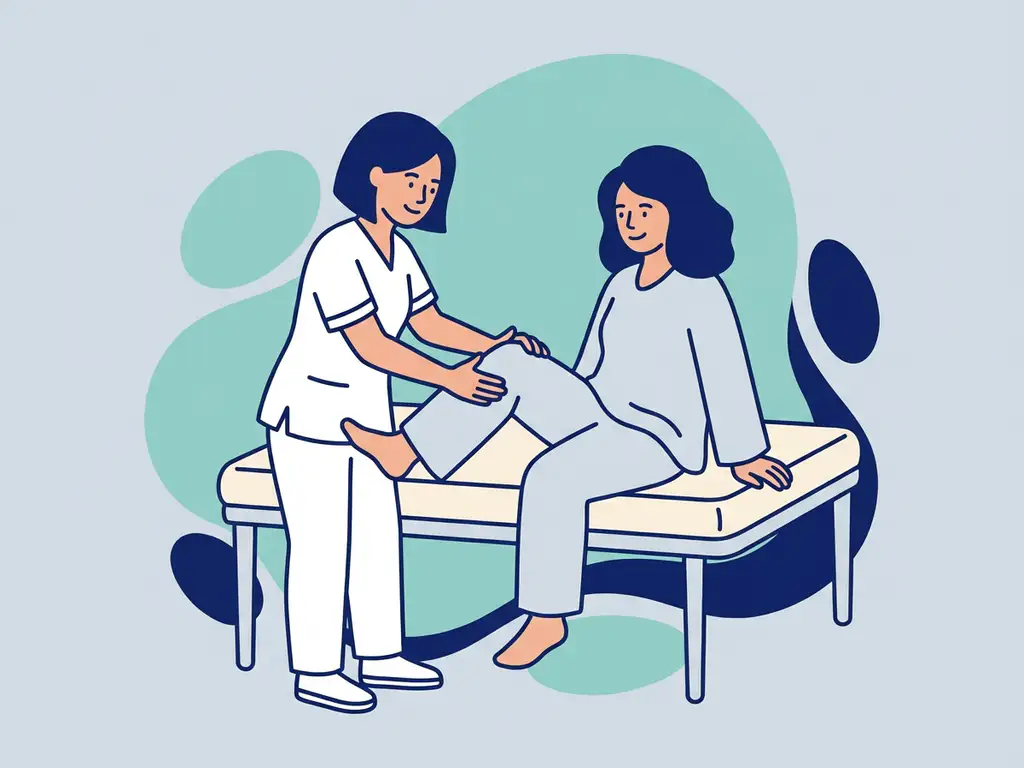
Recovery after a hip replacement typically takes between three and six months before most people return to daily activities comfortably, though full recovery can take up to a year. The exact timeline depends on your physical condition before surgery, the type of procedure performed, and how consistently you follow your rehabilitation programme. The sections below address the most important questions about recovery, physiotherapy, and where to find specialist support in the Breda region.
How long does it take to fully recover from a hip replacement?
Most people recover sufficiently to resume normal daily activities within three to six months after a hip replacement. Walking short distances, climbing stairs, and light household tasks are usually possible within the first few weeks, while more demanding activities such as cycling, gardening, or sport can take six months to a year to return to safely.
Recovery unfolds in recognisable phases. In the first two weeks, the focus is on wound healing, managing swelling, and regaining basic mobility with walking aids. Between weeks two and six, strength and range of motion gradually improve as the body adapts to the new joint. From three months onward, most patients notice a significant reduction in pain and a meaningful increase in what they can do independently. The final phase, up to twelve months, is about rebuilding full muscle strength and confidence in movement.
It is worth noting that recovery is rarely a straight line. Some days feel like progress, others like a step back. This is normal and expected, and it is one of the reasons structured guidance throughout the process makes such a difference.
What factors affect how quickly you recover after a hip replacement?
Several factors directly influence recovery speed after a hip replacement. Your physical fitness and muscle strength before surgery are among the most important, but age, body weight, the surgical technique used, and how quickly physiotherapy begins all play a significant role in determining how fast and how fully you recover.
Key factors that shape your recovery timeline include:
- Pre-operative fitness: Patients who are stronger and more mobile before surgery consistently recover faster. This is why prehabilitation, exercising and strengthening the hip before the operation, is increasingly recommended.
- Age and general health: Older age or the presence of conditions such as rheumatism, diabetes, or cardiovascular disease can slow tissue healing and reduce exercise tolerance.
- Surgical approach: Minimally invasive techniques generally result in less muscle damage and a shorter early recovery period.
- Consistency with rehabilitation: Following your physiotherapy programme closely and exercising regularly between sessions has a direct impact on outcomes.
- Mental attitude: Motivation, confidence, and a realistic but positive outlook genuinely influence how quickly patients regain function.
What does physiotherapy after a hip replacement actually involve?
Physiotherapy after a hip replacement focuses on restoring muscle strength, joint mobility, and movement patterns that support safe, independent function. It combines guided exercise therapy, movement education, and progressive loading of the new hip joint to help the body adapt and rebuild capacity over time.
In the early weeks, a physiotherapist will help you move safely, teach you how to get in and out of bed correctly, and guide you through exercises designed to reduce swelling and prevent complications such as blood clots. As recovery progresses, the exercises become more challenging, targeting the hip stabilisers, glutes, and surrounding muscle groups that support the new joint.
Physiotherapy is not limited to exercises alone. Your therapist will also explain what sensations and sounds are normal during recovery, help you understand your own body’s signals, and adjust the programme as your capacity grows. This combination of physical training and education is what turns rehabilitation into lasting improvement rather than just temporary pain relief.
When should physiotherapy start after a hip replacement?
Physiotherapy should start as soon as possible after a hip replacement, ideally within the first twenty-four to forty-eight hours after surgery. Early mobilisation is a medically supported principle that reduces the risk of complications, shortens hospital stays, and sets a stronger foundation for the rest of the recovery process.
In most cases, a physiotherapist will visit you in hospital before you are discharged to help you take your first steps and practise basic movements safely. Once home, physiotherapy at home is often the most practical option in the first weeks, particularly when mobility is still limited and travelling to a clinic is challenging.
As your strength and confidence grow, outpatient physiotherapy at a clinic allows for more intensive and varied rehabilitation, including supervised exercise on specialist equipment. The transition from home-based to clinic-based physiotherapy is a natural progression that your therapist will guide based on your individual progress.
Is physiotherapy in Breda available after a hip replacement?
Yes, specialist physiotherapy for recovery after a hip replacement is available to people in and around Breda. While Vief Leven is based in Tilburg, the practice regularly sees patients from the Breda region who are looking for focused, expert rehabilitation support for hip complaints.
At Vief Leven, recovery after a hip replacement is approached with the depth and personalisation that this phase of life demands. The practice specialises exclusively in hip and knee complaints, which means every aspect of the programme is built around your specific situation. Here is what that looks like in practice:
- A personalised treatment plan developed on the basis of your pre-operative condition, surgical outcome, and recovery goals
- Physiotherapy at home in the early post-operative phase, when travelling is still difficult
- Supervised exercise therapy using advanced equipment that tracks progress and allows for precise adjustments
- Clear information about what is normal during recovery, so you move forward with confidence rather than uncertainty
- Access to the Vitaliteitsclub, where you can continue exercising safely and effectively as part of your longer-term recovery
Whether you are preparing for surgery or already in recovery, a personalised approach makes all the difference. Explore more about hip osteoarthritis treatment at Vief Leven, or make an appointment directly to take the first step toward a stronger, more confident recovery.
Veelgestelde vragen
How do I know if my recovery is on track, or if something is wrong?
Some discomfort, swelling, and fatigue are completely normal in the weeks following a hip replacement, and minor fluctuations in how you feel from day to day are expected. However, you should contact your surgeon or physiotherapist promptly if you experience increasing redness, warmth, or discharge around the wound, a sudden spike in pain, significant swelling in your calf, shortness of breath, or a fever. A good physiotherapist will help you distinguish between normal recovery sensations and warning signs, so you always know when to push through and when to seek advice.
What exercises can I do at home between physiotherapy sessions?
Your physiotherapist will provide a tailored home exercise programme, but common early-stage exercises include ankle pumps to support circulation, gentle heel slides, static glute squeezes, and short supported walks. As recovery progresses, exercises typically advance to standing hip abductions, mini squats, and step-ups. The key is consistency — doing your prescribed exercises daily, even on days when motivation is low, has a measurable impact on how quickly you rebuild strength and mobility.
Are there any movements or activities I should avoid after a hip replacement?
In the first weeks after surgery, most patients are advised to avoid crossing their legs, bending the hip beyond 90 degrees, and rotating the foot sharply inward or outward — precautions that protect the new joint while surrounding tissues heal. The specific restrictions you need to follow depend on the surgical approach used, so always confirm these with your surgeon and physiotherapist. Over time, most restrictions are lifted as the hip stabilises, and your rehabilitation team will guide you on when it is safe to return to activities like cycling, swimming, or sport.
What is prehabilitation, and is it really worth doing before hip replacement surgery?
Prehabilitation refers to a structured programme of exercise and strength training carried out in the weeks before surgery, with the goal of improving your physical condition ahead of the operation. Research consistently shows that patients who are stronger and more mobile going into surgery recover faster, experience fewer complications, and regain independence sooner than those who do not prepare. Even a few weeks of targeted physiotherapy before your operation can make a meaningful difference to your post-operative trajectory.
How soon can I return to driving after a hip replacement?
Most people are able to return to driving somewhere between six and twelve weeks after a hip replacement, though this varies depending on which hip was operated on, the type of vehicle you drive, and your surgeon’s specific guidance. Before getting behind the wheel, you should be able to perform an emergency stop without hesitation or pain, and you must confirm with your surgeon and insurance provider that you are medically cleared to drive. Do not rely solely on how you feel — always get explicit clearance before resuming driving.
Can I continue exercising long-term after a hip replacement, and what activities are recommended?
Yes — regular exercise is not only safe after a hip replacement, it is actively encouraged and plays a key role in maintaining the longevity of the new joint. Low-impact activities such as walking, swimming, cycling, and strength training are widely recommended, as they build and preserve the muscle support around the hip without placing excessive stress on the joint. High-impact activities like running or contact sports are generally discouraged, though individual guidance from your physiotherapist will always be the most reliable basis for decisions about your specific situation.
What should I look for when choosing a physiotherapist for hip replacement recovery?
Look for a physiotherapist or practice that specialises in orthopaedic or musculoskeletal rehabilitation, and ideally one with specific experience in post-operative hip recovery. Specialisation matters because hip replacement rehabilitation requires a nuanced understanding of surgical approaches, joint precautions, and progressive loading principles that generalist practices may not apply with the same precision. It is also worth choosing a therapist who offers both home visits in the early phase and clinic-based sessions as you progress, ensuring continuity of care throughout your entire recovery journey.