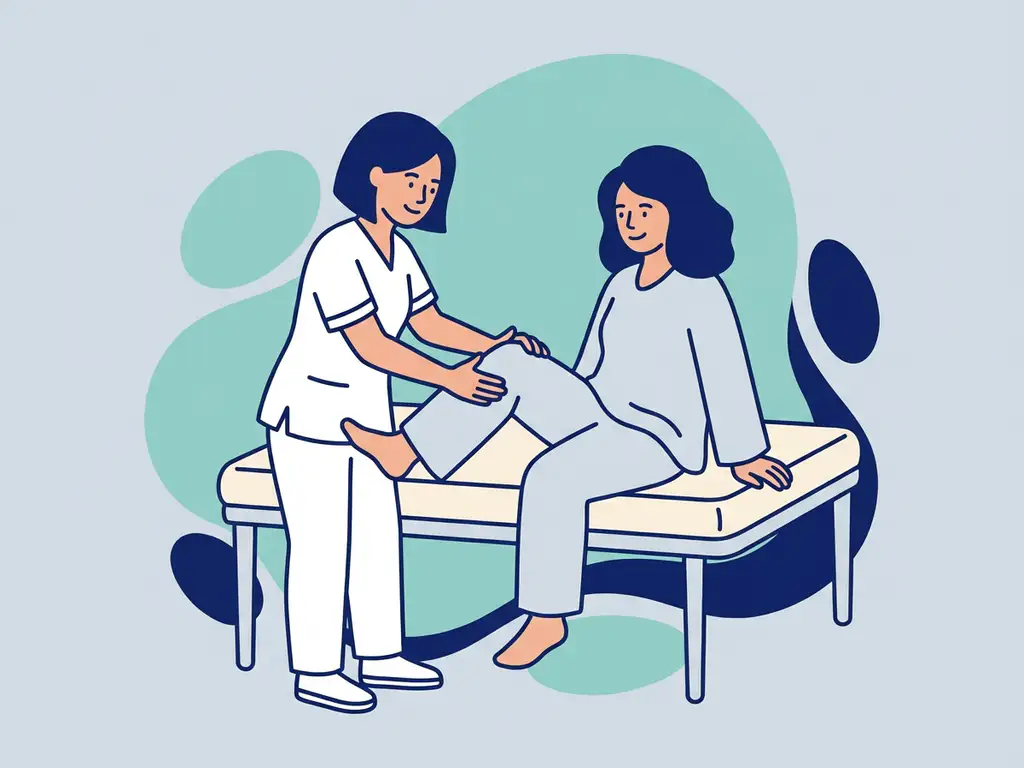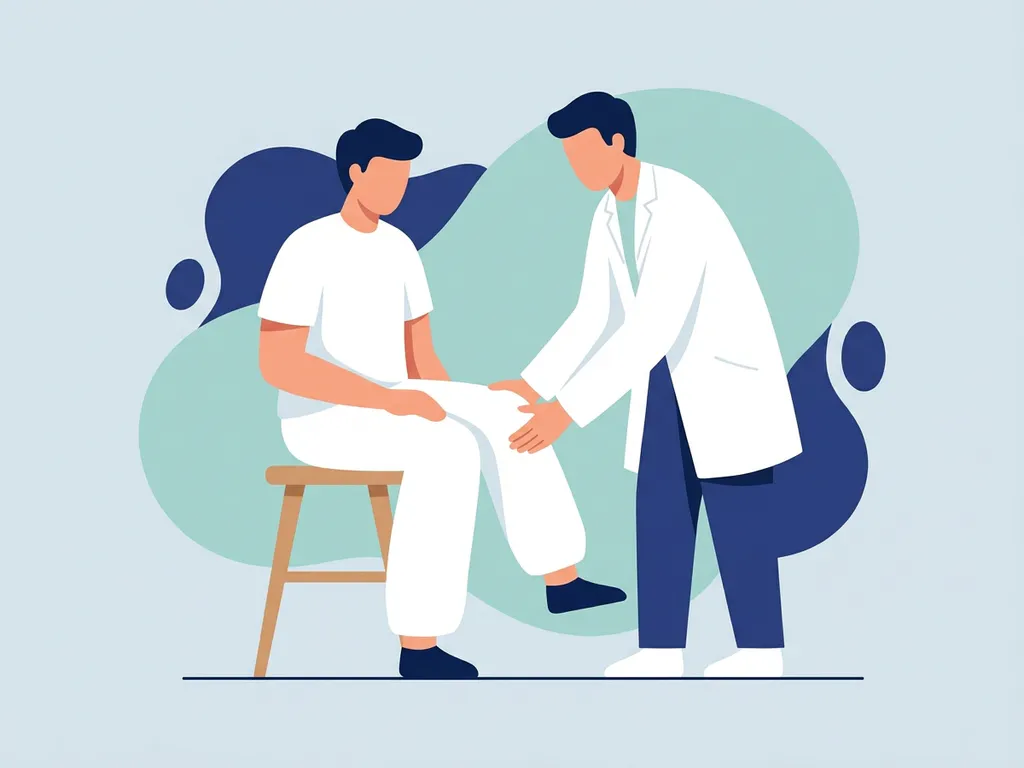
Recovery after a knee replacement typically takes between three and twelve months, depending on the individual. Most people regain basic mobility within six weeks, but returning to full activity, strength, and comfort in daily life is a longer process. The sections below walk through the key milestones, the role of physiotherapy, and what patients near Breda can expect at each stage.
How long does recovery from a knee replacement typically take?
Recovery from a knee replacement takes most people between six and twelve months to complete, though the timeline varies significantly based on age, overall fitness, and how actively someone participates in rehabilitation. The first six weeks focus on reducing swelling and restoring basic movement. Full recovery, including strength and confidence in daily activities, generally takes closer to nine to twelve months.
It helps to think of recovery in phases rather than a single timeline. In the first two weeks, the priority is managing pain, preventing complications, and beginning gentle movement. By weeks three to six, most people can walk short distances without a walking aid and start to feel more independent at home. Between months two and four, strength training becomes the focus, and many people return to light activities like walking outdoors or cycling on a stationary bike.
The final phase, from month four onward, is about consolidating gains. This is when people work on balance, endurance, and returning to activities that matter to them personally, whether that is gardening, walking longer distances, or playing with grandchildren on the floor.
What are the most important milestones in knee replacement recovery?
The most important milestones in knee replacement recovery are regaining full knee extension, bending the knee to at least ninety degrees, walking without a walking aid, climbing stairs independently, and returning to daily activities without significant pain. Each milestone builds on the previous one and signals that the joint and surrounding muscles are healing as expected.
- Week one to two: Reducing swelling, achieving straight leg extension, and taking first steps with support
- Week three to six: Walking independently indoors, bending the knee to ninety degrees, and managing basic self-care
- Month two to three: Climbing stairs with increasing confidence, and reducing reliance on pain medication
- Month three to six: Building muscular strength and endurance, and returning to light recreational activities
- Month six to twelve: Restoring balance and coordination, and fully resuming most normal daily activities
Missing a milestone does not necessarily signal a problem, but it is a useful prompt to review whether the rehabilitation programme needs adjustment. Progress is rarely linear, and short plateaus are a normal part of the process.
How does physiotherapy speed up recovery after a knee replacement?
Physiotherapy speeds up recovery after a knee replacement by guiding the body through progressively more demanding exercises that rebuild muscle strength, restore joint mobility, and retrain movement patterns. Without structured physiotherapy, scar tissue can limit range of motion, the muscles around the knee can remain weak, and patients often compensate in ways that create new problems in the hip or lower back.
A physiotherapist monitors how the joint is responding and adjusts the programme accordingly. This is particularly important in the early weeks when doing too little slows recovery but doing too much can increase swelling and set progress back. Guided exercise also gives patients the confidence to push past discomfort that feels alarming but is actually safe and necessary for healing.
Beyond the physical benefits, physiotherapy provides structure and accountability. Patients who work with a specialist are more consistent with their exercises, better informed about what is normal, and less likely to become anxious about unexpected sensations in the recovering joint.
What should you expect from physiotherapy sessions in Breda after surgery?
Physiotherapy sessions after knee replacement surgery in the Breda region typically begin within days of the operation and focus first on pain management, swelling reduction, and restoring basic mobility. Sessions become more active over time, progressing from assisted movement exercises to strength training and functional movement as the joint heals.
In practical terms, early sessions often include exercises performed lying down or sitting, gentle range-of-motion work, and guidance on how to move safely at home. As recovery progresses, sessions shift toward standing exercises, resistance training, and activities that mirror real-life demands such as stepping, bending, and walking on uneven surfaces.
A good physiotherapy programme in this region is always personalised. The exercises prescribed for a 58-year-old who wants to return to cycling will differ from those designed for a 72-year-old whose main goal is walking to the shops independently. Regular progress assessments allow the therapist to track results and make adjustments quickly when something is not working as expected.
Why does recovery sometimes feel slower than expected?
Recovery after a knee replacement can feel slower than expected for several reasons, including persistent swelling, insufficient muscle strength before surgery, inconsistent exercise habits during rehabilitation, and the natural but frustrating reality that joint healing simply takes time. Emotional factors such as anxiety or low motivation also play a significant role in perceived progress.
Swelling is one of the most common sources of frustration. The knee can remain visibly swollen for several months after surgery, and this swelling both limits movement and creates discomfort that makes exercise feel harder than it should. Managing swelling through elevation, ice, and appropriate activity levels is a central part of early rehabilitation.
Another factor is muscle weakness. The muscles around the knee often weaken significantly in the months before surgery because pain reduces activity. Rebuilding that strength takes time and consistent effort. Patients who enter surgery with stronger legs tend to progress more quickly, which is why preparing the body before the operation matters so much.
Can physiotherapy before surgery in Breda improve recovery outcomes?
Yes, physiotherapy before a knee replacement, often called prehabilitation, meaningfully improves recovery outcomes. Strengthening the muscles around the knee and hip before surgery gives the joint a stronger foundation to recover from. Patients who are physically better prepared before the operation tend to regain mobility faster, experience less post-operative pain, and often spend less time in hospital.
Prehabilitation also has a psychological benefit. Patients who have worked with a physiotherapist before surgery understand what the exercises involve, feel less uncertain about the recovery process, and go into the operation with greater confidence. This familiarity reduces anxiety and makes it easier to engage actively with rehabilitation from day one after surgery.
For people in and around Breda who have been told they need a knee replacement, starting physiotherapy as early as possible before the operation is one of the most effective steps they can take to influence how well and how quickly they recover afterward.
Hoe Vief Leven helpt bij herstel na een knieprothese
Vief Leven is een gespecialiseerde fysiotherapiepraktijk die mensen met knieklachten en artrose begeleidt, zowel voor als na een knieoperatie. De aanpak is persoonlijk, datagedreven en volledig afgestemd op jouw situatie en doelen. Dit is wat Vief Leven biedt:
- Voorbereiding op de operatie: Gerichte oefentherapie om de spieren rondom de knie te versterken voor de ingreep, zodat je sterker en fitter de operatie ingaat
- Revalidatie na de operatie: Een stapsgewijs opgebouwd hersteltraject met nauwkeurige voortgangsmonitoring en snelle aanpassingen waar nodig
- Fysiotherapie aan huis: Begeleiding bij je thuis in de eerste, meest kwetsbare fase na de operatie
- Vitaliteitsclub: Een veilige omgeving om te blijven bewegen en klachten structureel te verminderen
- Specialistische kennis: Exclusieve focus op heup- en knieklachten, met toegang tot geavanceerde trainingsapparatuur en een bewezen methodiek
Wil je weten hoe Vief Leven jouw herstel na een knieprothese kan ondersteunen? Lees meer over knie-artrose behandeling of maak direct een afspraak voor een persoonlijk gesprek.
Veelgestelde vragen
How much pain is normal during knee replacement rehabilitation, and when should I be concerned?
Some degree of pain and discomfort during physiotherapy exercises is normal and expected — it is part of the healing process. A useful rule of thumb is that pain during exercise should not exceed a 4 or 5 out of 10 and should settle back to your baseline level within 24 hours. If pain is consistently worsening, accompanied by increased redness, warmth, or swelling, or if you develop a fever, contact your surgeon or physiotherapist promptly, as these can be signs of complications such as infection or excessive inflammation.
What are the most common mistakes people make during knee replacement recovery?
The most common mistakes are doing too much too soon, skipping exercises when pain feels discouraging, and stopping rehabilitation as soon as basic mobility returns. Many patients underestimate how long the strength-building phase takes and disengage from their programme around months two or three, just when consistent effort matters most. Another frequent error is neglecting to manage swelling proactively — regular icing, elevation, and pacing activity levels in the early weeks can significantly reduce how much swelling interferes with progress.
When can I return to driving after a knee replacement?
Most people can return to driving an automatic car between four and eight weeks after surgery, provided the operated leg has sufficient strength and reaction speed to brake safely. If your right knee was replaced, the timeline is typically longer, as that leg controls the accelerator and brake. Always confirm with your surgeon before getting behind the wheel, and consider a practical reaction-time test with your physiotherapist to assess readiness objectively before resuming.
Is it normal for my knee to still feel stiff or swollen several months after surgery?
Yes, residual stiffness and swelling several months after a knee replacement are common and do not necessarily indicate a problem. The knee joint and surrounding soft tissues undergo significant trauma during surgery, and full resolution of swelling can take up to twelve months in some cases. Consistent movement, elevation when resting, and continued physiotherapy exercises are the most effective ways to manage this. If stiffness is significantly limiting your range of motion beyond the three-month mark, discuss this with your physiotherapist, as targeted manual therapy or programme adjustments may help.
What activities will I be able to return to after a full recovery, and are there any I should permanently avoid?
After a full recovery, most people can comfortably return to walking, cycling, swimming, golf, gardening, and light hiking. These low-impact activities are generally well-tolerated by a prosthetic knee and can be enjoyed long-term. High-impact activities such as running, jumping, or contact sports are typically discouraged, as repeated impact can accelerate wear on the implant and shorten its lifespan. Your physiotherapist and surgeon can give personalised guidance based on your implant type, age, and activity goals.
How do I know if my physiotherapy programme is working and I am making enough progress?
The clearest indicators that your programme is working are achieving the key milestones on a broadly expected timeline — such as bending to 90 degrees by weeks three to six and walking without a walking aid by week six — and noticing gradual, consistent improvements in strength, comfort, and functional tasks like climbing stairs. A good physiotherapist will conduct regular objective assessments to track these markers and should be transparent about your results. If you feel stuck or are not seeing progress over two to three weeks, raise it directly with your therapist so the programme can be reviewed and adapted.
How soon before my knee replacement surgery should I start prehabilitation physiotherapy?
Ideally, prehabilitation should begin six to twelve weeks before your scheduled surgery date to give your muscles enough time to build meaningful strength. Even two to four weeks of targeted exercise can make a noticeable difference if your surgery date is approaching sooner. The focus should be on strengthening the quadriceps, hamstrings, and hip muscles, as these are the primary muscle groups that support the knee during recovery. Starting as early as possible after receiving your surgery date is always the right call.