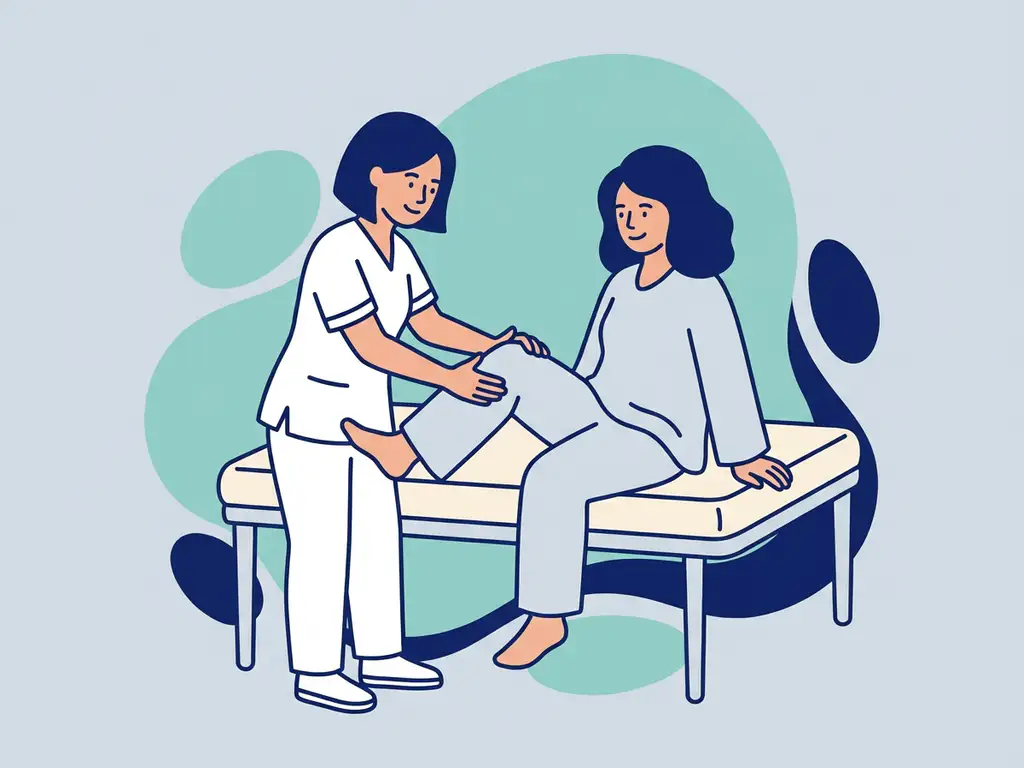
Physiotherapy guidance for hip osteoarthritis involves a structured programme of assessment, personalised exercise therapy, and education designed to reduce pain, improve mobility, and help you stay active in daily life. For people in and around Den Bosch, this kind of specialist support is available at nearby practices with dedicated expertise in hip and knee complaints. This article walks through the most important questions people ask about physiotherapy for hip osteoarthritis.
What does physiotherapy guidance for hip osteoarthritis actually involve?
Physiotherapy guidance for hip osteoarthritis is a personalised treatment process that combines targeted exercise, movement education, and load management to reduce pain and improve the function of the hip joint. Rather than focusing on rest, the approach actively builds the hip’s capacity to handle daily movement, which is the most effective way to manage osteoarthritis over the long term.
A well-structured programme typically includes three core elements. First, a thorough intake to understand your specific complaints, limitations, and goals. Second, a tailored exercise plan that gradually increases the strength and resilience of the muscles around the hip. Third, practical guidance on how to apply what you learn in the clinic to your everyday routines, whether that means walking, climbing stairs, or staying active with your grandchildren.
The goal is not simply to manage symptoms during sessions but to give you the tools and confidence to take control of your own recovery and maintain progress independently.
How does a physiotherapist assess hip osteoarthritis severity?
A physiotherapist assesses hip osteoarthritis severity through a combination of physical tests, a detailed intake conversation, and observation of how you move. This assessment identifies which movements are restricted, how much pain you experience during activity, and how your hip function compares to what you need for your daily life.
During the intake, the physiotherapist asks about the history of your complaints, what triggers pain, and what activities you can no longer do comfortably. Physical tests typically examine range of motion in the hip joint, muscle strength, walking pattern, and balance. In some practices, data-driven tools and training equipment are used to measure load capacity precisely, which makes it possible to monitor progress objectively and adjust the treatment plan quickly when needed.
This assessment is not a one-off event. A good physiotherapist reassesses regularly throughout the treatment process to track improvement and fine-tune the approach.
What exercises are used in hip osteoarthritis physiotherapy?
Exercises used in hip osteoarthritis physiotherapy focus on strengthening the muscles that support and stabilise the hip, improving flexibility, and building overall load capacity. The most commonly used exercises include hip abductor strengthening, leg press variations, step exercises, and low-impact cardiovascular movement such as cycling or walking.
The specific exercises depend entirely on your current fitness level, the severity of your complaints, and your personal goals. Someone who struggles to walk for more than ten minutes needs a very different starting point than someone who wants to return to recreational sport. Exercises are introduced gradually, with resistance and intensity increasing as your hip becomes stronger and more resilient.
Movement in water, resistance band work, and balance training are also frequently incorporated, particularly in the earlier stages when joint load needs to be managed carefully. The emphasis throughout is on consistency and progressive challenge rather than intensity.
Should you do physiotherapy before hip replacement surgery?
Yes, physiotherapy before hip replacement surgery is strongly recommended. Pre-operative physiotherapy, often called prehabilitation, prepares the muscles, improves your overall fitness, and helps you understand what the recovery process involves. Patients who are physically stronger going into surgery tend to recover more quickly and with fewer complications.
Prehabilitation typically focuses on strengthening the muscles around the hip and the broader leg, improving cardiovascular fitness, and practising movements you will need during early recovery such as getting up from a chair safely or using walking aids. It also gives you the opportunity to ask questions and reduce anxiety about the procedure and what to expect afterwards.
Beyond the physical benefits, arriving at surgery well-prepared gives you a psychological advantage. You go in with a clearer picture of the road ahead, which makes the early weeks of recovery less uncertain and more manageable.
How long does physiotherapy for hip osteoarthritis take?
Physiotherapy for hip osteoarthritis typically takes between three and six months to achieve meaningful and lasting results, though this varies significantly depending on the severity of your complaints, your starting fitness level, and how consistently you follow the programme. Some people notice clear improvement within the first few weeks; others need longer to build the strength and habits that sustain progress.
It is important to understand that hip osteoarthritis is a chronic condition, which means the goal of physiotherapy is not a fixed endpoint but a sustainable way of staying active and managing your hip over time. Many patients continue with some form of exercise maintenance after the formal treatment phase ends, either independently or through a supervised group setting.
The frequency of sessions also varies. In the early stages, weekly or twice-weekly appointments are common. As you progress and become more confident with your exercises, sessions become less frequent and your own daily routine takes on a larger role.
Where can you find specialised hip osteoarthritis physiotherapy near Den Bosch?
For people living in or around Den Bosch who are looking for specialised physiotherapy for hip osteoarthritis, Vief Leven is a dedicated practice with the expertise, facilities, and personal approach to make a real difference. Based in Tilburg and accessible from the Den Bosch region, the practice focuses exclusively on hip and knee osteoarthritis, which means every aspect of the care is tailored to your specific situation.
Vief Leven works according to the Vief Method, a structured three-step approach that starts with building a personalised treatment plan, then provides the right information about your specific condition, and finally activates your body through targeted exercise therapy. The practice uses advanced air pressure technology equipment to develop data-driven treatment plans and monitor your progress closely, so adjustments can be made quickly to achieve the best possible results.
What makes Vief Leven particularly well-suited for people with hip complaints includes:
- Specialised focus on hip and knee osteoarthritis, not a general physiotherapy practice
- A state-of-the-art training facility with data-driven progress monitoring
- Pre-operative preparation and post-operative rehabilitation guidance
- Home physiotherapy for patients in the early recovery phase after surgery
- The Vitaliteitsclub, a supervised exercise environment specifically for people with osteoarthritis
- A personal approach that keeps your daily life and independence at the centre of the plan
Whether you are in the early stages of hip complaints, preparing for surgery, or recovering afterwards, Vief Leven offers the specialist support you need. Visit heupartrose behandeling to learn more about the approach, explore Vief Leven for a full overview of services, or go directly to een afspraak maken to take the first step toward a more active, pain-free life.
Veelgestelde vragen
Can physiotherapy actually slow down the progression of hip osteoarthritis?
While physiotherapy cannot reverse the structural changes of osteoarthritis, consistent exercise therapy has been shown to slow symptom progression by strengthening the muscles that support the hip joint and reducing the load placed on cartilage during daily movement. Stronger, more resilient muscles act as a natural shock absorber, which can significantly reduce the rate at which symptoms worsen over time. The key is maintaining an active lifestyle with a well-structured programme rather than waiting until symptoms become severe before seeking help.
Is it safe to exercise when my hip is painful — won't it make things worse?
This is one of the most common concerns people have, and the short answer is that appropriate, guided exercise is safe even when pain is present. A physiotherapist will calibrate the type, intensity, and volume of exercise to stay within a manageable pain range, typically ensuring that any discomfort during activity settles back to baseline within 24 hours. Avoiding movement altogether tends to weaken the muscles around the hip further, which often makes pain and stiffness worse over time — making guided exercise one of the most effective tools for breaking that cycle.
How do I know when conservative physiotherapy is no longer enough and surgery might be the right option?
Surgery is generally considered when a consistent, well-executed physiotherapy programme over several months has not produced sufficient improvement in pain or function, and when the impact on your quality of life remains significant. Your physiotherapist and GP can help evaluate this together, taking into account your pain levels, mobility, imaging results, and personal goals. It is worth noting that even if surgery becomes necessary, physiotherapy beforehand and afterwards remains essential for the best possible outcome.
What can I do at home between physiotherapy sessions to support my recovery?
Between sessions, the most valuable thing you can do is consistently follow your prescribed home exercise programme, even on days when your hip feels better — regularity matters more than intensity. Beyond structured exercises, staying generally active through low-impact activities like walking or cycling helps maintain joint mobility and cardiovascular fitness. It is also helpful to pay attention to how daily habits such as sitting posture, chair height, and footwear affect your hip load, as small adjustments in routine can meaningfully reduce discomfort over time.
What is the Vitaliteitsclub and who is it suitable for?
The Vitaliteitsclub at Vief Leven is a supervised group exercise environment specifically designed for people living with hip or knee osteoarthritis who have completed or are progressing through their formal treatment phase. It provides a structured setting to continue exercising safely with professional oversight, which helps people maintain the strength and habits built during physiotherapy without having to navigate a standard gym environment independently. It is particularly well-suited for anyone who finds it difficult to stay motivated exercising alone or who wants the reassurance of expert supervision as part of their long-term management.
How soon after hip replacement surgery can I start physiotherapy rehabilitation?
Post-operative physiotherapy typically begins within the first day or two after hip replacement surgery, often while you are still in hospital, with gentle mobility and movement exercises to prevent stiffness and support circulation. Once discharged, a structured rehabilitation programme is essential to rebuild strength, restore walking pattern, and safely return to daily activities — this is where home physiotherapy can be especially valuable in the early weeks when travelling to a clinic is difficult. The full rehabilitation timeline varies by individual, but most people progress through distinct phases over three to six months, with milestones guided closely by their physiotherapist.
Does health insurance cover physiotherapy for hip osteoarthritis in the Netherlands?
In the Netherlands, physiotherapy for hip osteoarthritis is not covered by the basic health insurance package (basisverzekering) but is typically reimbursed through supplementary insurance (aanvullende verzekering), depending on the level of coverage you have chosen. It is worth checking with your insurer how many sessions are covered per year and whether specialist physiotherapy practices are included in their reimbursement network. If you are unsure, a practice like Vief Leven can often advise you on what to check with your insurer before starting treatment, so there are no unexpected costs.