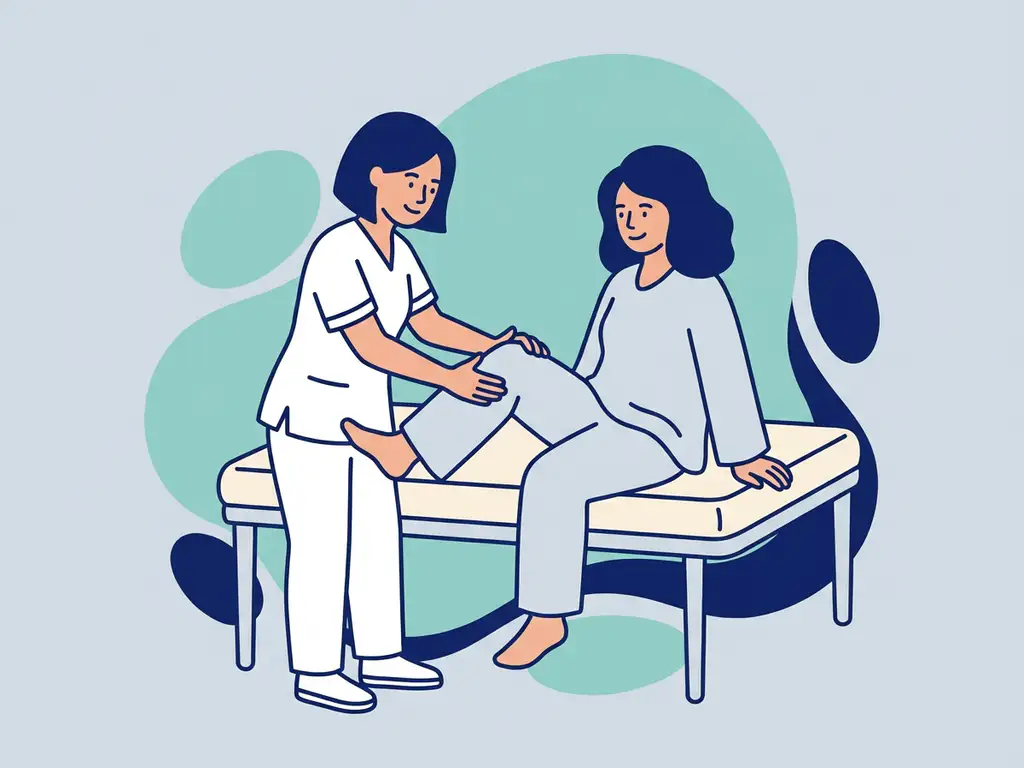
In Den Bosch en de regio zoeken steeds meer mensen met knieklachten naar gerichte begeleiding door een fysiotherapeut. Fysiotherapie bij knieartrose richt zich op het verminderen van pijn, het verbeteren van de beweeglijkheid en het versterken van de spieren rondom het kniegewricht. De aanpak is altijd persoonlijk: wat werkt voor de ene persoon, werkt niet automatisch voor de ander. In dit artikel beantwoorden we de meest gestelde vragen over fysiotherapeutische begeleiding bij knieartrose.
What does physiotherapy for knee osteoarthritis actually involve?
Physiotherapy for knee osteoarthritis involves a structured combination of exercise therapy, movement education, and lifestyle guidance aimed at reducing pain and improving the load-bearing capacity of the knee joint. The goal is not simply to manage symptoms but to actively strengthen the muscles around the knee so the joint is better supported during daily activities.
A physiotherapist begins by mapping out how the knee is functioning and where limitations exist. From there, treatment typically includes targeted strength and mobility exercises, advice on how to move more efficiently in daily life, and guidance on pacing activity levels to avoid flare-ups. In more advanced cases, the physiotherapist may also prepare a patient for surgery or guide recovery afterward. The emphasis throughout is on active participation: the patient is never a passive recipient but an engaged partner in their own recovery.
How does a physiotherapist assess knee osteoarthritis severity?
A physiotherapist assesses knee osteoarthritis severity through a combination of physical examination, movement analysis, and a detailed intake conversation about symptoms, daily limitations, and medical history. This assessment does not rely on imaging alone but focuses on how the knee is actually functioning in real life.
During the intake, the physiotherapist asks about the nature and timing of pain, which activities trigger or relieve it, and how symptoms affect daily routines such as walking, climbing stairs, or rising from a chair. The physical examination then tests the range of motion in the knee, muscle strength in the surrounding leg muscles, joint stability, and pain response to specific movements. Together, these findings create a clear picture of the severity and the most effective direction for treatment. This functional approach means that two people with the same diagnosis on paper may receive very different treatment plans based on their individual presentation.
What exercises are used to treat knee osteoarthritis?
The exercises used to treat knee osteoarthritis primarily focus on strengthening the quadriceps, hamstrings, and hip muscles, as these muscle groups directly support and stabilize the knee joint. Alongside strength training, exercises that improve balance, coordination, and range of motion are also central to an effective program.
Common exercise categories in knee osteoarthritis treatment include:
- Quadriceps strengthening: Leg presses, seated knee extensions, and step-ups build the front thigh muscles that bear much of the load on the knee.
- Hip and glute strengthening: Exercises such as bridges and side-lying leg raises reduce stress on the knee by improving overall lower limb alignment.
- Balance and proprioception training: Single-leg stands and balance board exercises retrain the body’s ability to stabilize the knee during movement.
- Low-impact aerobic activity: Walking, cycling, and swimming maintain joint mobility and overall fitness without excessive strain.
The specific combination and intensity of these exercises are always tailored to the individual. A person with mild stiffness and minimal pain will follow a different program than someone with significant joint degeneration or recent surgery. Progress is monitored closely so adjustments can be made as strength and tolerance improve.
Should you do physiotherapy before knee replacement surgery?
Yes, doing physiotherapy before knee replacement surgery is strongly recommended. Pre-operative physiotherapy, sometimes called prehabilitation, improves muscle strength, joint mobility, and physical condition before the operation, which is directly associated with a smoother and faster recovery afterward.
Entering surgery with stronger leg muscles and better overall fitness gives the body more resources to draw on during the demanding early weeks of rehabilitation. Patients who have prepared physically tend to regain mobility more quickly, experience less post-operative pain, and feel more confident during recovery. Pre-operative physiotherapy also provides an important psychological benefit: the patient arrives at the operating table with a clearer understanding of what to expect and a sense of active control over the process. For anyone with a knee replacement scheduled in 2026, starting preparation several weeks in advance makes a meaningful difference to the outcome.
How long does physiotherapy for knee osteoarthritis take?
The duration of physiotherapy for knee osteoarthritis varies depending on the severity of symptoms, the patient’s baseline fitness, and their specific goals, but most people see meaningful progress within six to twelve weeks of consistent treatment. Ongoing maintenance exercise may continue well beyond that period.
In the early stages of osteoarthritis, a focused program of several weeks is often sufficient to significantly reduce pain and restore functional movement. For those with more advanced joint degeneration or a longer history of inactivity, treatment may take longer and require a more gradual build-up of exercise intensity. Recovery after knee replacement surgery follows its own timeline, typically spanning several months of guided rehabilitation before full function is restored. The key factor in all cases is consistency: regular exercise and active engagement with the treatment plan produce far better results than sporadic attendance. A good physiotherapist will set clear milestones, track progress objectively, and adapt the program as the patient develops.
Hoe Vief Leven helpt bij knieartrose in de regio Den Bosch
Vief Leven is een gespecialiseerde fysiotherapiepraktijk in Tilburg die zich volledig richt op heup- en knieartrose. Voor mensen in Den Bosch en de omliggende regio biedt Vief Leven een gerichte, persoonlijke aanpak die verder gaat dan standaard fysiotherapie. De praktijk werkt met de Vief Methode: een drietrapsaanpak waarbij een persoonlijk behandelplan centraal staat, de juiste informatie over jouw specifieke situatie wordt gedeeld, en het lichaam stap voor stap wordt geactiveerd via oefentherapie.
Wat Vief Leven onderscheidt:
- Geavanceerde trainingsapparatuur met luchtdruktechnologie voor een data-gedreven aanpak
- Nauwkeurige voortgangsmonitoring zodat het behandelplan snel bijgesteld kan worden
- Begeleiding voor en na een knieoperatie, inclusief fysiotherapie aan huis in de vroege herstelfase
- De Vitaliteitsclub: een veilige omgeving om te blijven bewegen met artrose
- Persoonlijke begeleiding gericht op jouw dagelijkse leven en doelen
Wil je weten wat Vief Leven voor jou kan betekenen bij knieartrose? Bekijk het volledige aanbod op viefleven.nl of maak direct een afspraak voor een persoonlijk gesprek.
Veelgestelde vragen
Can knee osteoarthritis get worse if I exercise too much or too intensely?
Exercise, when properly guided, does not worsen knee osteoarthritis — in fact, the right amount of activity is one of the most effective ways to manage it. The key is finding the appropriate load for your current level of joint health, which is something a physiotherapist helps you calibrate. Overloading the joint without guidance can cause temporary flare-ups, which is why starting gradually and progressing systematically is so important. If you experience increased swelling or pain lasting more than 24 hours after exercise, that is a signal to scale back and consult your physiotherapist.
What is the difference between physiotherapy and just going to the gym for knee osteoarthritis?
While both involve exercise, physiotherapy for knee osteoarthritis is a clinically guided process tailored specifically to your joint’s condition, movement patterns, and pain profile — something a general gym program cannot provide. A physiotherapist identifies which muscle imbalances or movement compensations are contributing to your symptoms and designs a program to address those directly. They also monitor your response to treatment and adjust the plan as you progress, reducing the risk of setbacks. A gym program can absolutely be part of long-term maintenance, but it works best once a physiotherapist has established a safe and effective foundation.
How do I know if my knee pain is osteoarthritis or something else, like a ligament injury?
Knee osteoarthritis typically presents as a dull, aching pain that develops gradually over time, often worsening after prolonged activity or at the end of the day, and is frequently accompanied by morning stiffness that eases within 30 minutes. Ligament injuries, by contrast, tend to occur suddenly following a specific movement or trauma and may involve instability, swelling, or a feeling that the knee is u0022giving way.u0022 A physiotherapist can help distinguish between these during a physical assessment, though imaging may sometimes be recommended to confirm a diagnosis. If you are unsure about the source of your knee pain, booking an intake appointment is the most reliable first step.
Is physiotherapy still effective for knee osteoarthritis in older adults or those with significant joint degeneration?
Yes — physiotherapy has been shown to be effective across all age groups and at various stages of knee osteoarthritis, including more advanced cases. Even when joint degeneration is significant, strengthening the surrounding muscles can meaningfully reduce pain and improve daily function, often delaying or even avoiding the need for surgery. Older adults may require a more gradual progression and greater attention to balance and fall prevention, but these factors are built into a well-designed treatment plan. Age and degeneration level affect the approach, not the potential for meaningful improvement.
What lifestyle changes complement physiotherapy for knee osteoarthritis?
Several lifestyle factors work alongside physiotherapy to reduce knee osteoarthritis symptoms and slow its progression. Maintaining a healthy body weight is one of the most impactful changes, as even modest weight loss significantly reduces the load on the knee joint during everyday activities. Staying consistently active — through low-impact options like cycling, swimming, or walking — helps maintain joint mobility and muscle strength between sessions. Attention to sleep quality, stress management, and anti-inflammatory nutrition can also support recovery, and a good physiotherapist will often address these broader lifestyle factors as part of a holistic treatment plan.
How soon after knee replacement surgery can I start physiotherapy, and what does early rehabilitation look like?
Physiotherapy typically begins within the first 24 to 48 hours after knee replacement surgery, often while the patient is still in the hospital. Early rehabilitation focuses on gentle range-of-motion exercises, safe mobilization, and preventing complications such as blood clots or excessive stiffness. In the weeks that follow, the program progressively introduces strength training, walking practice, and functional movement drills to restore everyday independence. For those who cannot easily travel to a clinic in the early recovery phase, home-based physiotherapy — such as that offered by Vief Leven — ensures that rehabilitation starts promptly without disruption.
What should I look for when choosing a physiotherapist for knee osteoarthritis?
When selecting a physiotherapist for knee osteoarthritis, look for someone with demonstrable experience in musculoskeletal conditions and, ideally, a specialization in hip and knee pathology. A good physiotherapist will conduct a thorough intake assessment, explain their reasoning behind the treatment approach, and set measurable goals with you from the outset. Practices that use objective progress monitoring — such as strength measurements or functional movement assessments — give you clear evidence of how your treatment is progressing. It is also worth asking whether the practice offers continuity of care, meaning you work consistently with the same therapist who understands your history and goals.