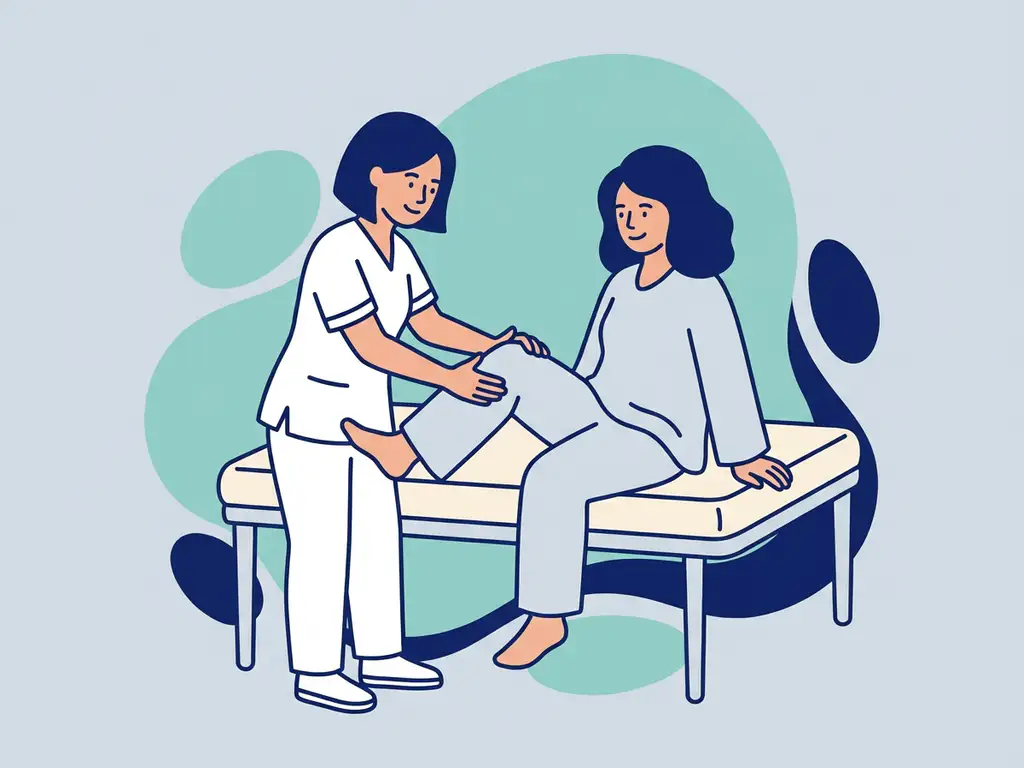
Physiotherapy for hip osteoarthritis helps you manage pain, improve mobility, and strengthen the muscles around the hip joint so daily activities become easier. For people in the Eindhoven region, specialist physiotherapy guidance is accessible and can make a meaningful difference at every stage of the condition. This article answers the most common questions about how physiotherapy works for hip osteoarthritis, from the first assessment through to surgery and beyond.
What does physiotherapy for hip osteoarthritis actually involve?
Physiotherapy for hip osteoarthritis is a structured, active treatment approach that combines exercise therapy, education, and personalized guidance to reduce pain, improve joint function, and increase the load capacity of the hip. Rather than simply resting or waiting for symptoms to worsen, physiotherapy empowers you to take an active role in managing your condition.
A physiotherapist works with you to understand exactly how your hip osteoarthritis affects your daily life, whether that means difficulty climbing stairs, reduced walking distance, or disturbed sleep. From that starting point, treatment focuses on strengthening the muscles that support the hip, improving flexibility, and gradually building up what your body can handle.
Education is a core part of the process. Understanding what is happening in your hip joint, why movement is beneficial rather than harmful, and how to adapt daily activities gives you confidence and helps you make better decisions about your own health. This combination of movement and knowledge is what makes physiotherapy so effective for hip osteoarthritis over the long term.
How does a physiotherapist assess hip osteoarthritis?
A physiotherapist assesses hip osteoarthritis through a combination of a detailed intake conversation, physical examination, and movement testing. The goal is to build a complete picture of how your hip is functioning, what is causing your specific complaints, and what your personal goals are so treatment can be tailored precisely to your situation.
During the intake, your physiotherapist will ask about the nature and location of your pain, how long you have had symptoms, which activities are most affected, and what your daily life looks like. This context is essential because hip osteoarthritis presents differently from person to person.
The physical examination typically includes:
- Assessing the range of motion in your hip joint
- Testing the strength of surrounding muscles, particularly the glutes, hip flexors, and thigh muscles
- Observing your walking pattern and posture
- Identifying which movements provoke pain or stiffness
- Evaluating your overall fitness and physical capacity
This thorough assessment allows the physiotherapist to set realistic treatment goals and create a plan that is genuinely personalized rather than generic.
What exercises are used in hip osteoarthritis physiotherapy?
Exercises used in hip osteoarthritis physiotherapy focus on strengthening the muscles around the hip joint, improving mobility, and building overall physical capacity. The specific exercises chosen depend on your individual assessment, but the emphasis is always on progressive loading, meaning the intensity increases gradually as your body adapts.
Common exercise categories include:
- Strengthening exercises: Targeting the gluteal muscles, hip abductors, and quadriceps to better support the hip joint and reduce stress on the cartilage
- Mobility and flexibility work: Gentle stretching and range-of-motion exercises to maintain and improve joint movement
- Functional exercises: Movements that mimic daily activities such as standing from a chair, walking, or climbing stairs
- Balance and stability training: Exercises that improve coordination and reduce the risk of falls
- Low-impact aerobic activity: Walking, cycling, or swimming to support general fitness without placing excessive strain on the joint
Exercise therapy for hip osteoarthritis is not about pushing through pain. A good physiotherapist monitors your response carefully and adjusts the program based on how your body reacts, ensuring progress remains steady and sustainable.
Can physiotherapy help before or after hip replacement surgery?
Yes, physiotherapy is highly beneficial both before and after hip replacement surgery. Pre-operative physiotherapy, sometimes called prehabilitation, prepares your body for the demands of surgery and recovery. Post-operative physiotherapy guides you through rehabilitation to restore strength, movement, and independence as effectively as possible.
Physiotherapy before hip replacement
Going into surgery in good physical condition significantly improves outcomes. Pre-operative physiotherapy strengthens the muscles around the hip, improves overall fitness, and teaches you the exercises and movements you will need during recovery. Patients who prepare well before surgery tend to regain mobility faster and experience a smoother recovery process.
Physiotherapy after hip replacement
After a hip replacement, physiotherapy is essential. In the early weeks, the focus is on safe movement, managing swelling, and preventing complications. As recovery progresses, treatment shifts to rebuilding strength and gradually returning to normal daily activities. For patients in the early post-operative phase, physiotherapy at home is also an option, providing professional guidance during the period when getting to a clinic can be challenging.
How long does physiotherapy for hip osteoarthritis take?
The duration of physiotherapy for hip osteoarthritis varies from person to person and depends on the severity of your symptoms, your physical condition, and your personal goals. Most people notice meaningful improvement within a few weeks of consistent treatment, but a complete program typically runs over several months to achieve lasting results.
For mild to moderate hip osteoarthritis, a course of treatment might involve regular sessions over eight to twelve weeks, combined with a home exercise program. For more advanced cases or those preparing for or recovering from surgery, the physiotherapy journey may be longer and more intensive.
Progress is tracked throughout, allowing your physiotherapist to adjust the program as needed. The aim is not just short-term pain relief but building a level of strength and knowledge that allows you to manage your hip osteoarthritis independently over the long term. Many patients continue with a maintenance exercise program after their main treatment course ends.
Is physiotherapy in Eindhoven available for hip osteoarthritis patients?
Yes, physiotherapy for hip osteoarthritis is available for patients in the Eindhoven region. People from Eindhoven and surrounding areas who are dealing with hip complaints, preparing for surgery, or recovering from a hip replacement can access specialized physiotherapy guidance without needing to travel far.
Hoe Vief Leven helpt bij heupartrose
Vief Leven is een gespecialiseerde fysiotherapiepraktijk in Tilburg die zich volledig richt op mensen met heup- en knieartrose. Voor patiënten uit de regio Eindhoven biedt Vief Leven persoonlijke, deskundige begeleiding die verder gaat dan standaard fysiotherapie. Wat Vief Leven onderscheidt:
- De Vief Methode: Een drietraps aanpak waarbij een persoonlijk behandelplan wordt opgesteld, je de juiste informatie over jouw situatie krijgt, en je lichaam stap voor stap wordt geactiveerd via oefentherapie
- Geavanceerde trainingsapparatuur: Een state-of-the-art trainingsruimte met luchtdruktechnologie voor nauwkeurige, datagestuurde behandeling en voortgangsbewaking
- Begeleiding voor en na een heupoperatie: Zowel prehabilitatie als postoperatieve revalidatie, inclusief fysiotherapie aan huis in de vroege herstelfase
- De Vitaliteitsclub: Een unieke omgeving waar mensen met artrose veilig en effectief kunnen bewegen onder begeleiding
- Reumatologische fysiotherapie: Gespecialiseerde zorg voor mensen met chronische of wisselende klachten
Of je nu net begint met klachten, een operatie overweegt, of teleurgesteld bent door eerdere behandelingen, bij Vief Leven staat jouw persoonlijke situatie centraal. Lees meer over de begeleiding bij heupartrose of bekijk de kosteninformatie. Klaar om de eerste stap te zetten? Maak een afspraak en ontdek hoe Vief Leven jou kan helpen sterker en zelfstandiger te worden.
Veelgestelde vragen
How do I know if my hip pain is osteoarthritis or something else, and should I see a physiotherapist either way?
Hip osteoarthritis typically presents as a deep, aching pain in the groin, outer hip, or buttock that worsens with activity and improves with rest, often accompanied by stiffness after sitting or sleeping. However, similar symptoms can arise from bursitis, muscle strains, or referred pain from the lower back, which is why a proper diagnosis from a GP or specialist is recommended before starting treatment. A physiotherapist can still assess you regardless, as the intake and physical examination will help clarify the source of your pain. If there is any uncertainty, your physiotherapist will refer you back to your doctor for further investigation such as an X-ray.
Is it safe to exercise when my hip is painful, or will it make the damage worse?
This is one of the most common concerns people have, and the evidence is clear: appropriate exercise does not worsen hip osteoarthritis and is in fact one of the most effective treatments available. The key word is appropriate — exercises are carefully selected and progressively loaded to stay within a manageable pain range, typically no more than a mild, temporary discomfort during activity that settles within 24 hours. Cartilage does not have a blood supply and relies on movement to receive nutrients, so staying active is genuinely beneficial for joint health. Your physiotherapist will monitor your response closely and adjust the program to ensure you are always exercising safely.
What can I do at home between physiotherapy sessions to support my recovery?
Consistency between sessions is one of the biggest factors in how quickly you progress, and your physiotherapist will provide a tailored home exercise program to keep you on track. Beyond the prescribed exercises, low-impact activities like daily walking, cycling, or swimming help maintain joint mobility and general fitness without overloading the hip. Managing your activity levels thoughtfully — avoiding long periods of inactivity as well as sudden spikes in load — also makes a significant difference. Keeping a simple log of your pain levels and which activities feel easier or harder gives you useful information to share with your physiotherapist at your next appointment.
Can physiotherapy delay or even prevent the need for hip replacement surgery?
For many people, physiotherapy can significantly delay the need for surgery, and in some cases, well-managed conservative treatment means surgery never becomes necessary. Research consistently shows that strengthening the muscles around the hip reduces the mechanical load on the joint, which can slow symptom progression and improve quality of life for years. That said, physiotherapy does not reverse structural changes in the joint, and for people with severe osteoarthritis, surgery may eventually be the right path. The goal of physiotherapy is to ensure that if and when you do reach that decision, you are going into it as strong and well-prepared as possible.
How soon after hip replacement surgery should I start physiotherapy, and what does early rehabilitation look like?
Physiotherapy typically begins within the first day or two after hip replacement surgery, often while you are still in hospital. Early rehabilitation focuses on safe mobilization — getting you standing and walking with support — as well as breathing exercises, swelling management, and learning the precautions specific to your type of implant. Once you are home, a physiotherapist can visit you there during the initial weeks when travel to a clinic is difficult, gradually transitioning to clinic-based sessions as your mobility improves. Following your physiotherapist’s guidance closely in this early phase is critical, as it sets the foundation for how well and how quickly you regain full independence.
What are the most common mistakes people make when managing hip osteoarthritis on their own?
The two most common mistakes are complete rest and unguided overexertion — both extremes tend to make symptoms worse rather than better. Many people stop moving because they fear pain signals mean damage, which leads to muscle weakness and increased joint stiffness over time. On the other end, some people push through significant pain without professional guidance, which can trigger flare-ups and set back progress. Another frequent mistake is stopping physiotherapy as soon as pain reduces, rather than continuing to build the strength and capacity needed for long-term management. Working with a physiotherapist ensures you stay in the productive middle ground throughout your recovery.
Does my health insurance cover physiotherapy for hip osteoarthritis in the Netherlands?
In the Netherlands, physiotherapy for hip osteoarthritis is not included in the basic health insurance package (basisverzekering) for adults, meaning you will generally need supplementary insurance (aanvullende verzekering) to have sessions reimbursed. The number of sessions covered depends on your specific policy, so it is worth checking with your insurer before starting treatment. Some practices offer transparent pricing for self-paying patients, and it is always worth asking about the costs upfront so you can plan accordingly. For information about costs specific to your situation, checking directly with the physiotherapy practice you plan to visit is the most reliable approach.